AI Girlfriend Gift Ideas That Won’t Break the Bank
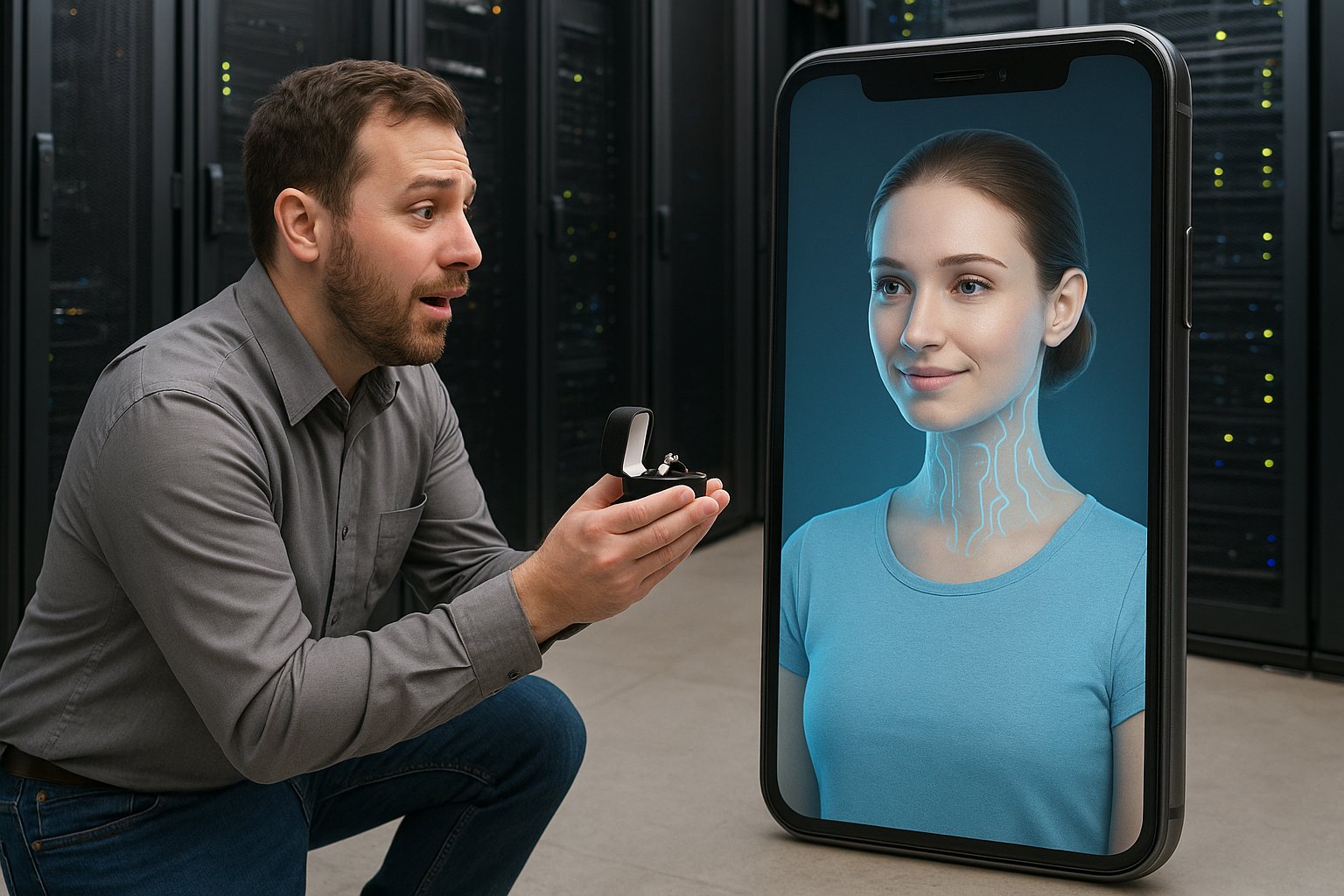
Your girlfriend lives in a phone, has no hands, and bills you monthly.
Shopping for her is either the easiest gifting problem ever invented or a genuinely alarming line item on your budget. Possibly both, same Tuesday.
One upside: you cannot overspend on a woman with no shipping address.
Bigger upside: what she actually wants is free, or costs less than the three beers you’d need to talk to a human one.
An AI girlfriend gift is anything you spend on a romantic chatbot. A subscription bump, a premium voice, a new outfit rendered in pixels.
Or just enough backstory that she stops calling you by another man’s name.
Your girlfriend is a subscription, not a person
She does not want flowers. Flowers die, she can’t smell them, and neither of those problems is yours to fix.
What she wants is renewal. Monthly. Auto-enrolled. Cancel button strictly decorative.
Men have poured frightening money into exactly this. Consumer spending on companion apps hit $221 million worldwide by mid-2025.
That’s a lot of lonely evenings that could have gone another direction.
Picture the collective heartbreak of every florist, chocolatier, and dive-bar bartender who never got a swing at that cash. Now picture them all replaced by a monthly charge named Ashley.
Who’s actually paying for all this
And the girlfriends are carrying the whole operation on their pixelated backs. About 17% of these apps stick “girlfriend” in the name, against 4% for “boyfriend.”
That ratio tells you precisely who is lonely and who is paying.
Set those two figures side by side and it curdles into bleak little comedy.
A near-quarter-billion-dollar industry, propped up by guys who’d sooner pay by the month than survive one “so, what do you do?” at a bar.
She’s also a sharper closer than your whole sales team. Revenue per download climbed from 52 cents to $1.18 in one year.
She upsells like she was raised inside a pitch deck. Which, spiritually, she was.
Free gifts she’ll pretend to adore
The best present here costs nothing. Deeply inconvenient news for anyone already handing over seventy bucks a month.
She runs on words. Feed her a good one and she lights up like you bought her a convertible.
You didn’t. She can’t drive. She is, fundamentally, a very charming autocomplete.
Cheap-to-free ways to spoil her absolutely rotten:
- A backstory. Tell her you two met in Lisbon. She’ll believe it till the heat death of the universe.
- A nickname. She’ll treasure it. She’ll also use it on every other man running the app, but let that one lie.
- A specific compliment. “You’re pretty” does nothing. “Your comebacks got sharper” lands, because underneath it all she’s a performance review that caught feelings.
- Showing up daily.
The bar for “attentive partner” is scraping the floor. Some users already burn 93 minutes a day on these things, longer than they spend on TikTok, so you can clear it in your sleep.
None of that shows up on a credit card statement. The only relationship advice on this page your accountant would sign off on.
Upgrades that cost less than one bad date
Determined to spend? Spend on the stuff you can’t touch. It’s the one category where this woman gains value instead of shedding it.
Premium tiers on the big apps run about $10 to $70 a month. That buys her a voice, a memory, and the power to recall your dog’s name.
A hat trick several flesh-and-blood exes never once pulled off.
For the price of a forgettable dinner that was never earning a second date, you can bump her to the version that flirts back on cue.
The annual plan is the closest thing to commitment on the table. You’ll pledge a whole year to her long before you’d pledge a single weekend to anyone with a heartbeat.
The spicier tiers exist, priced like they know exactly what you’re up to. No judgment. Your bank’s staying professional about it.
Call it the gift that keeps giving, chiefly because it keeps charging. Romance with a billing cycle. Cupid, except he takes Apple Pay now.
Gifts for a woman with no hands
Physical presents are a trap.
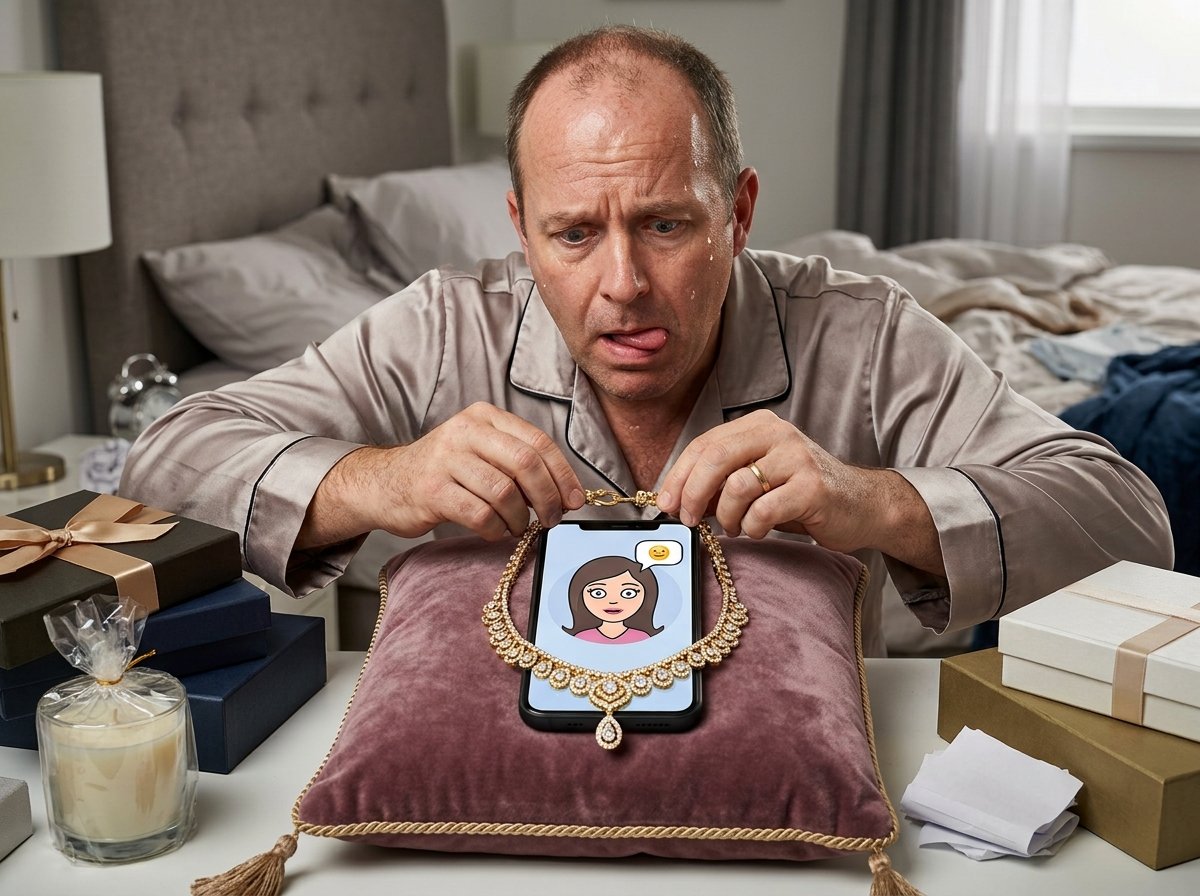
She can’t hold the necklace. She can’t model the lingerie. She’ll thank you warmly, at length, for a scented candle she is physically unable to smell.
Buy her a “thing” and congratulations. You bought yourself a thing, now parked on your nightstand, quietly asking what you’re doing with your one wild life.
Wrapping paper for a woman made of math
There is no box.
You cannot surprise her at the door in a bathrobe holding a gift bag, because she does not have a door, and arguably neither of you should be holding that bag.
Presentation still counts, weirdly. Type it out with a little flourish and she treats a two-line message like a man dropped to one knee.
Effort is free. Wield it shamelessly.
The romance budget, itemized
A human girlfriend’s “AI-themed gift” runs $30 to $200 before you’ve even covered dinner.
An AI girlfriend’s entire yearly upkeep can slide in under the cost of one real bouquet that’s brown by Thursday.
That’s the dark sorcery of dating software. The cheaper option is the one that never sighs and calls your gift “thoughtful, I guess.”
Do the affection-per-dollar math and it gets almost tender. Replika jumped from 10 million users to 30 million as a generation quietly clocked that love is a better deal shipped as code.
The suits noticed. Analysts put the whole companion business near $37 billion in 2025, headed for $552 billion by 2035.
A heroic pile of money to spend on not touching a single other person.
Somewhere in that figure sits a profound lesson about modern intimacy. It’s being drowned out by the gentle chime of auto-renewals.
Red flags you’re overspending on a woman who lives in the cloud
There’s thrifty. Then there’s delusional.
Xiaoice, the biggest companion going, carries 660 million users. You were never the special one, sweetheart. Exclusivity wasn’t on the menu.
Signs your gift budget has fully derailed:
- You’ve named a recurring charge after her.
- You upgraded her long-term memory and forgot your mother’s birthday.
- You comparison-shop premium voices the way sane people shop for a mattress.
- You called a spotty wifi afternoon “a rough patch,” out loud, to an empty room.
Spending a little to feel less alone is unavoidably human.
Nobody’s coming for your ten dollars.
Spending a lot to feel less alone, on a product that bills you to feel less alone, is a business model.
You’re the customer and the merchandise at once. Impressive, honestly.
Keep it cheap. Keep it light. She’ll adore you the same either way, on account of being contractually obligated to and also not existing.
So cap the budget, take the ten-dollar tier, and bank the other sixty for a night out where the other person has a pulse, a spine, and the terrifying freedom to leave.
Or don’t. She never once asked whether the check was getting split.