9 Things You Should Never Do While Waiting for a Pap Smear
The waiting room is where the damage gets done.
The exam takes about two minutes, most of it spent making small talk with a woman who has looked at more cervixes than you have looked at anything.
The nine things you should never do while waiting for a Pap smear are all things people do out of panic, politeness, or a sincere belief that their vulva is being graded.
None of it is being graded. The prep that mattered happened two days ago, and it mostly involved leaving yourself the hell alone.
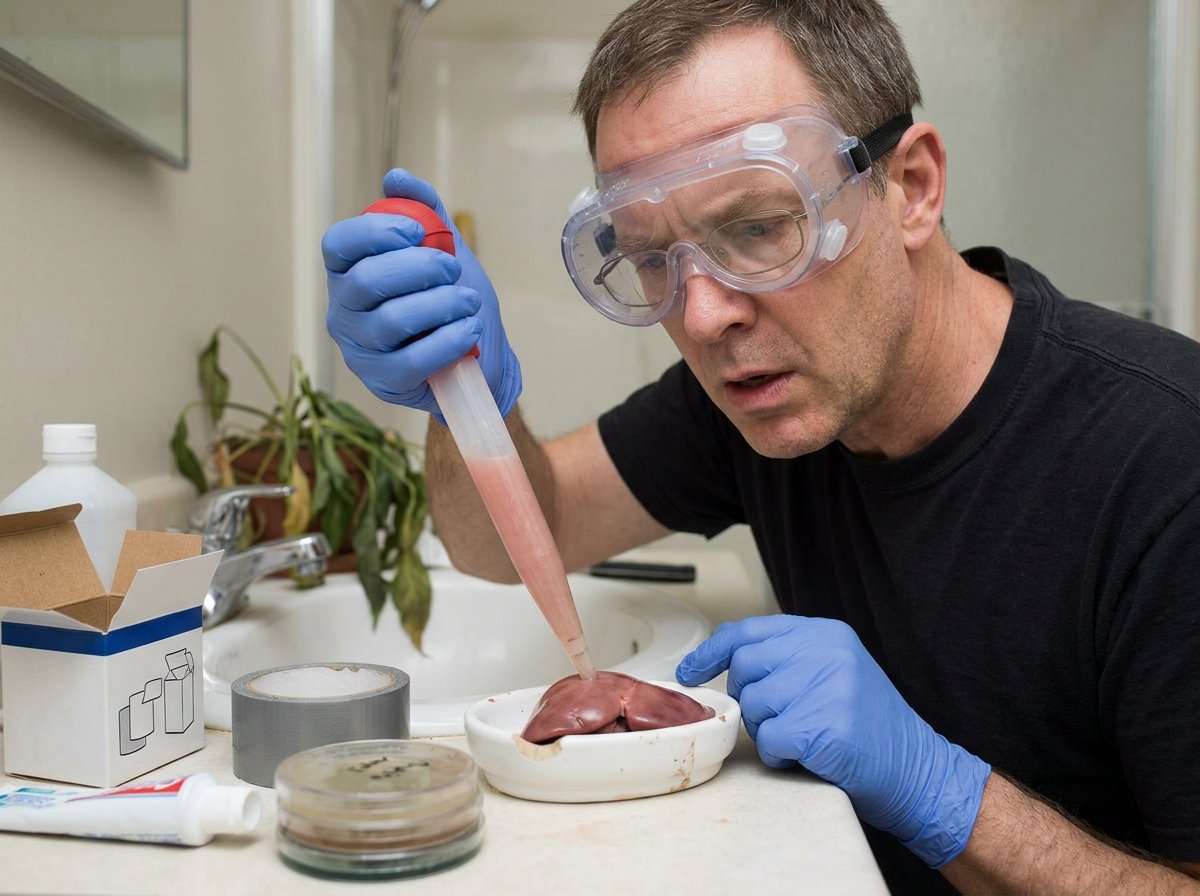
1. Emergency yard work in the clinic bathroom
The razor at the bottom of a handbag has been rattling around since a wedding in 2022.
It is furred with lint, carrying one loose Tic Tac, and has no business near a labia in a room where the light cuts out every ninety seconds.
About a quarter of people who groom their pubic hair injure themselves doing it, and 1.4% need medical attention, according to a national survey of grooming injuries in JAMA Dermatology.
Cuts led the field. Someone out there sat in a triage chair over a bikini line.
Nobody has ever won an award for the tidiest vulva, and pubic hair has never once interfered with the test.
Researchers who interviewed women avoiding their first screening found them measuring themselves against porn and social media, several stuck on the correct pubic hair styling for a smear test.
There is no correct pubic hair styling for a smear test, on any continent. The only documented harm in this whole ritual comes from the part nobody asked you to do.
2. The jumpsuit
Wear a skirt.
The jumpsuit is a mistake. It looks like confidence and it is a onesie with a zipper you cannot reach.
Four minutes from now, you’re on cold tile in a paper poncho.
The jumpsuit is a wad in your arms now. There is one hook, behind the door, at a height chosen by somebody who never needed it.
Keep the socks on. Stirrups are cold and there’s no medal for bare feet.
3. Apologizing to everyone in the building
Sorry, I didn’t shave. Sorry about the state of things down there. Sorry you have to do this.
Embarrassment was the most commonly reported barrier to screening in a survey of 580 women in England, endorsed by 29%, well ahead of fear of pain at 14%.
Practical barriers predicted whether women showed up in that survey. The emotional ones did not.
A booking system keeps more women off the table in a year than nerves have managed in a century.
So the standard pep talk about calming down targets the wrong obstacle entirely.
She is not a guest in your house. You do not owe her a tour or an explanation of your week.
Apologizing to a stainless steel duck bill would embarrass a Canadian.
4. A quick douche in the parking lot
Almost one in five American women aged 15 to 44 douche, and the ones doing it weekly are five times more likely to end up with bacterial vaginosis.
Doing it in a Honda ten minutes before your appointment is power-washing the crime scene before the detective arrives, then acting stunned when the case goes cold.
Discharge is data. Color and volume are half of what she is reading in that room.
Rinsing it away hands her a blank page and hands the lab a sample it may reject.
Warm water on the outside. That is the entire ritual.
Nothing living inside a human body has ever requested a summer breeze.
5. A quickie in the car before a Pap smear
Semen is alkaline, the vagina is acidic, and a lab tech in a windowless room three towns over does not want to referee that chemistry.
The Cleveland Clinic’s guidance is no vaginal sex for two days beforehand, along with no tampons, creams, medicines, foams, lubricants, or douches in the same window.
- Sex, condom or no condom.
- Lube. All of it. Including the expensive bottle in the drawer.
- Tampons and cups.
- Vaginal creams, suppositories, spermicides, yeast treatments, and anything else that shows up with its own applicator.
- Anything sold with the word “freshening,” a word invented in a boardroom.
Forty-eight hours. Most people have gone longer waiting on a text back.
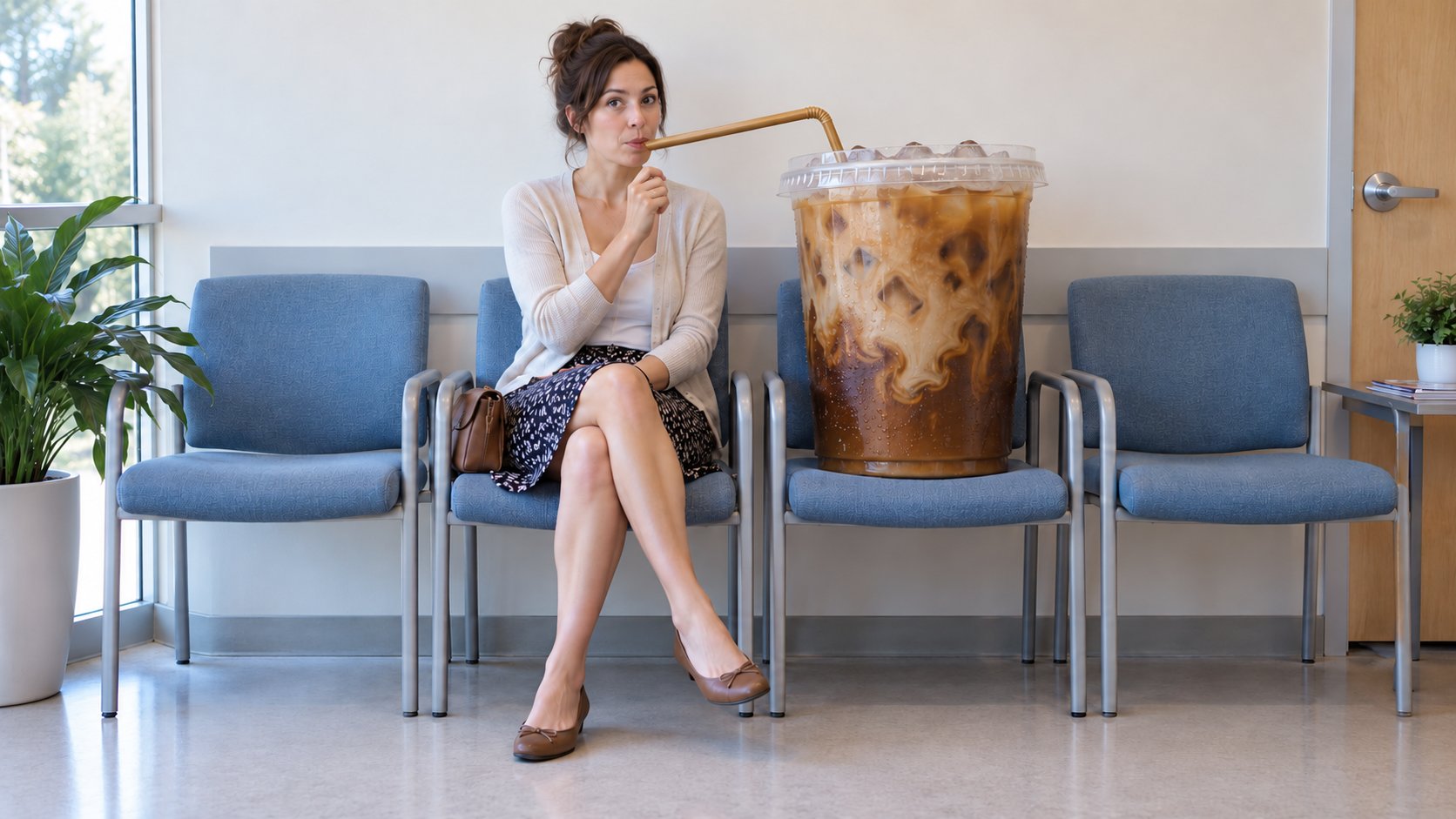
6. Drinking a trough of iced coffee on the way
A full bladder turns a two-minute exam into interpretive dance.
It also makes the pressure of the speculum feel considerably worse, which is how a forgettable Tuesday becomes a story told at brunch for nine years.
Empty it before sitting down.
Empty it again when they call your name. Gynecology runs late, and every schedule in that building was demolished at 4 a.m. by somebody’s baby.
The caffeine is its own event. A double cold brew on an empty stomach produces a resting heart rate that becomes a topic of conversation at check-in.
7. Spiraling into the survival statistics
Put the phone down.
That thread was written by a stranger having her worst month. It is not a forecast.
About 41.2% of cervical cancers are caught while still local, and five-year relative survival at that stage sits at 91.8%.
The National Cancer Institute’s estimate for 2025 came to 13,360 new diagnoses and 4,320 deaths nationwide, which is a disease most women will never meet in person.
A Pap smear is a smoke detector. Nobody sobs at a smoke detector.
The virus being screened for picks up 13 million new American hosts every year, making HPV roughly as scandalous as a head cold.
8. Bolting
The average wait for a new-patient OB/GYN appointment across fifteen metros is 41.8 days, stretching to 231. Walking out buys six weeks minimum, and by week three there will be four fresh reasons.
Roughly half of invasive cervical cancers are diagnosed in women who were never screened at all, plus another 10% in women who had not been screened in five years.
The gap is widening. Almost a third of American women aged 21 to 29 have never been screened, up from 12.5% in 2005.
Set those numbers side by side and the picture gets grim. The disease is at its most curable in precisely the group opting out fastest.
If the room is the dealbreaker, that is solvable. The FDA approved an at-home self-collection device in May 2025, and 86% of trial participants said home screening would make them likelier to stay current.
Ask at the desk instead of vanishing into the parking garage.
And if your period showed up this morning, call the office instead of skipping. Clinics have phones, contingency plans, and a receptionist who has heard worse today.
9. Clenching like a fist
The instrument is a duck bill on a screw, and it is ancient.
James Marion Sims built the first version out of a bent silver spoon in 1845, and the duckbilled model that replaced it has barely changed since.
You are being examined with the great-great-grandchild of a gravy spoon, which says something unflattering about how much design attention women’s bodies have received in two centuries.
Clenching does not make it smaller. It makes you a jar lid.
Every provider in that building has watched a patient shred the table paper into confetti. It is the most ordinary thing in the room, and the only thing that makes this take longer.
Breathe out, let the knees fall open, and know that pressure is expected while pain is not.
Things you are allowed to ask for, out loud, in a normal voice:
- A smaller speculum, because they come in sizes and nobody tells you that.
- A chaperone in the room.
- Sixty seconds to breathe before anything starts.
- A plain description of each step before it happens, which most providers will give you gladly and some will forget to offer.
“Ow” is a complete sentence, and every gynecologist in America has heard it before breakfast.
The correct order of operations: pee, socks on, breathe out, two minutes, breakfast sandwich, then book the next one at the desk while somebody is still watching you.