CRISPR Organ Cloning Tips for Dummies
CRISPR organ cloning tips for dummies is a phrase that should not exist, and yet here you sit, mouth-breathing with ambition.
Let’s set expectations.
CRISPR is a gene-editing tool that cuts DNA like molecular scissors with a vendetta. Scientists use it to build organs your immune system won’t try to murder on arrival.
You will use it to lightly traumatize a houseplant and call it a breakthrough.
The science is real and frankly gorgeous. Surgeons are editing pig organs so they survive inside actual humans, which is the most metal sentence in all of medicine.
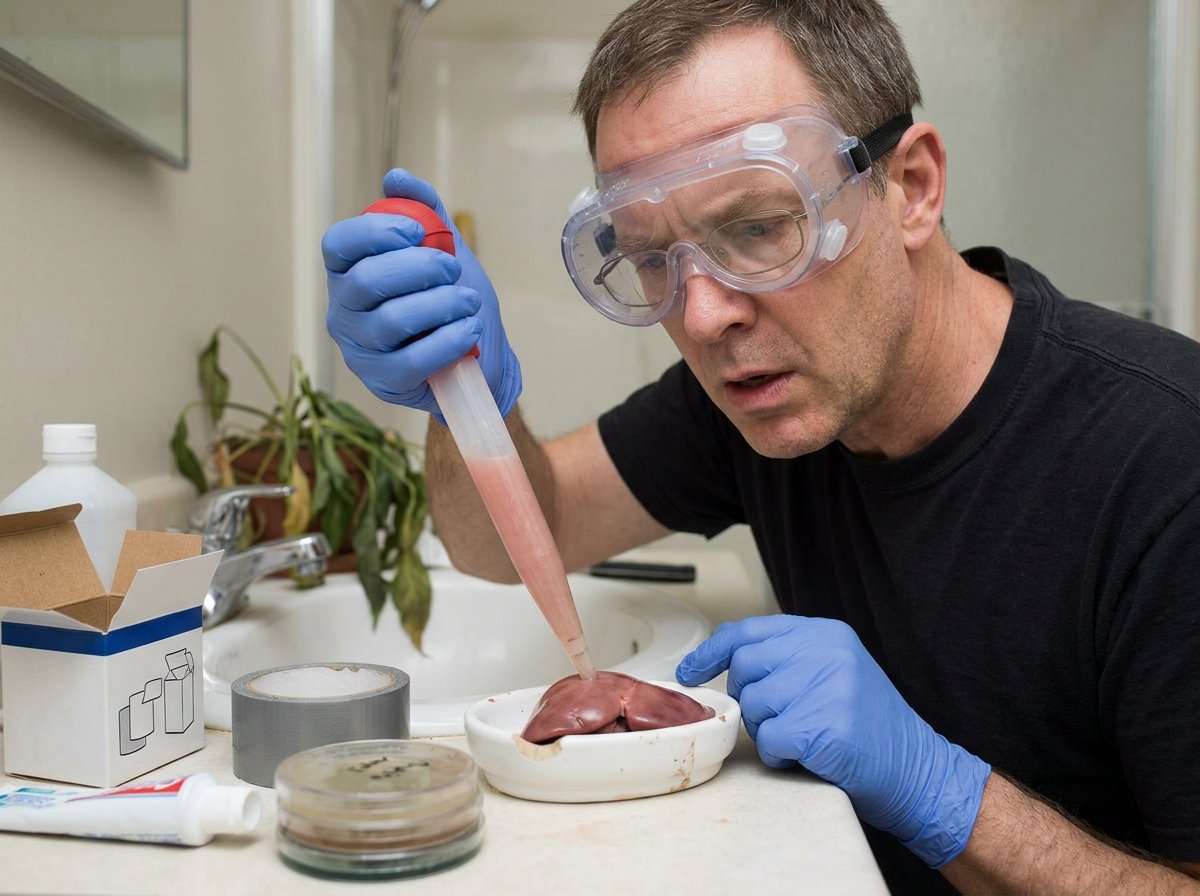
The “for dummies” part is where you waddle in, holding a turkey baster like it’s a medical degree.
Okay, but what the hell is CRISPR organ cloning?
CRISPR is pronounced “crisper,” like the fridge drawer where your good intentions go to liquefy.
The tool hunts down a target in your DNA using a roughly 20-base guide RNA, a tiny molecular snitch that leads the scissors straight to the spot most worth ruining.
Then an enzyme named Cas9 swaggers in and slices both strands of the DNA clean through.
Your cell loses its entire mind, tries to repair the cut, and that panic is exactly when sneaky scientists shove in the gene they wanted all along.
Organ cloning bolts this onto a bigger fantasy. Grow or edit a fresh replacement part so your wheezing original can finally clock out.
It is wildly cool. It is also not happening next to your Christmas decorations.
Your spare liver does not respect you
Your organs have seen things. Your liver has filed several formal complaints.
Cloning a new one sounds easy until you remember your body spent decades building the original with a full supply chain. You can’t keep a sourdough starter breathing past Tuesday.
Every organ is a wet, ungrateful little machine with opinions. Your kidneys silently judge every energy drink you’ve ever inhaled.
The dream is to print a backup so your old one can retire to a beach. The reality is your bathroom does not have negative-pressure airflow, and neither does your soul.
Here is the part nobody screenshots for the vision board.
The reason this matters is brutal. More than 100,000 people sit on the U.S. transplant waitlist, and 17 die every single day waiting for a part you’re treating like a craft project.
So maybe respect the liver.
Cas9 is scissors with a god complex
Meet your lead actor. Cas9 is a protein that cuts DNA, and it did not come here to be your friend.
It won’t snip just anywhere, because that would be reckless, and Cas9 saves its recklessness for your feelings.
It demands a short PAM sequence sitting right beside the target before it agrees to cut anything. No PAM, no snip, no exceptions, you absolute amateur.
Think of Cas9 as a bouncer who reads the guest list, finds your name spelled wrong, and ejects your genome into the parking lot.
One transplant doctor lovingly called the gene-editing toolkit “magical scissors” for tweaking pig DNA. Magical, sure. Also extremely capable of mincing the wrong gene into a fine paste while you blink.
The two scientists who cracked this open won the 2020 Nobel Prize in chemistry. You will win the 2020 Nobel Prize in chemistry approximately never.
Pick an organ, any organ
Beginners always reach for the showstoppers. A new heart. A glistening lung. A liver that hasn’t met your weekend.
Ambition is adorable. Your blood pressure won’t be.
Choose based on how badly you want to embarrass yourself in front of a microscope:
- The kidney, beloved beginner organ, mostly because you have a spare and the disappointment is therefore split evenly.
- The liver, which regenerates, so it will simply regrow the parts of itself that you ruined, judging you the entire time.
- The skin, technically your largest organ and the only one petty enough to peel off in protest.
- The pancreas. Don’t. It’s a diva and it will absolutely take you down with it.
- The heart, if you enjoy poetic failure and a funeral with a tasteful slideshow.
Notice that not one of these belongs in a Tupperware on your counter.
The pig has entered the chat
Here’s the plot twist that makes real scientists look like wizards and you look like a guy with a YouTube tab open. The future of organ cloning is a pig.
A very specific, very expensive, profoundly edited pig.
Companies grow pigs engineered with around ten gene edits, ripping out the pig parts your body hates and bolting in human genes so the organ blends in at the party.
And it works. In 2025, the FDA cleared the first trials of gene-edited pig kidneys in living people.
It gets better and more humiliating for you specifically. One man who received a gene-edited pig kidney recovered well enough to throw out the first pitch at Fenway Park.
A pig organ got a man back to baseball.
Your last “project” was a dead basil plant and a small grease fire. Sit with that.
Ways you will absolutely screw this up
Failure in real labs comes from microscopic off-target edits. Failure in your home comes from a man named you.
The classics never go out of style:
- Confusing “sterile” with “I wiped it on my jeans, which are basically clean.”
- Ordering a CRISPR kit online and being shocked it doesn’t come with a competent adult.
- Editing a gene with zero plan, the genetic equivalent of texting your ex at 1 a.m.
- Believing the YouTube tutorial filmed by a teenager in a gaming chair.
- Whispering “I am basically a doctor” to a petri dish, which has heard this lie before.
Every one of these ends with you on the floor, lab goggles fogged, negotiating with a cell line that has stopped returning your calls.
And no, your blender is not a centrifuge. Stop pressing the smoothie button.
Read the room, which is a lab you are not in
Real organ work happens in facilities with airflow systems, ethics boards, and people who have never once said “trust me, I watched a documentary.”
You have a futon and a dream.
The professionals make this look easy because they are extremely, unfairly good at it, and because they spent years failing in rooms with proper ventilation and adult supervision.
The honest move is to be amazed by them instead of becoming a cautionary tale with a GoFundMe.
So where does that leave you
Right here, gloriously unqualified, slightly more informed, and ideally putting the turkey baster down.
CRISPR organ cloning is one of the most jaw-dropping things our species has ever pulled off, and the smartest tip for dummies is shockingly simple. Let the geniuses cook.
Go cheer for the pig. The pig earned it.
This is a comedic, satirical piece, not a how-to, and CRISPR organ work belongs strictly to trained professionals in regulated labs.