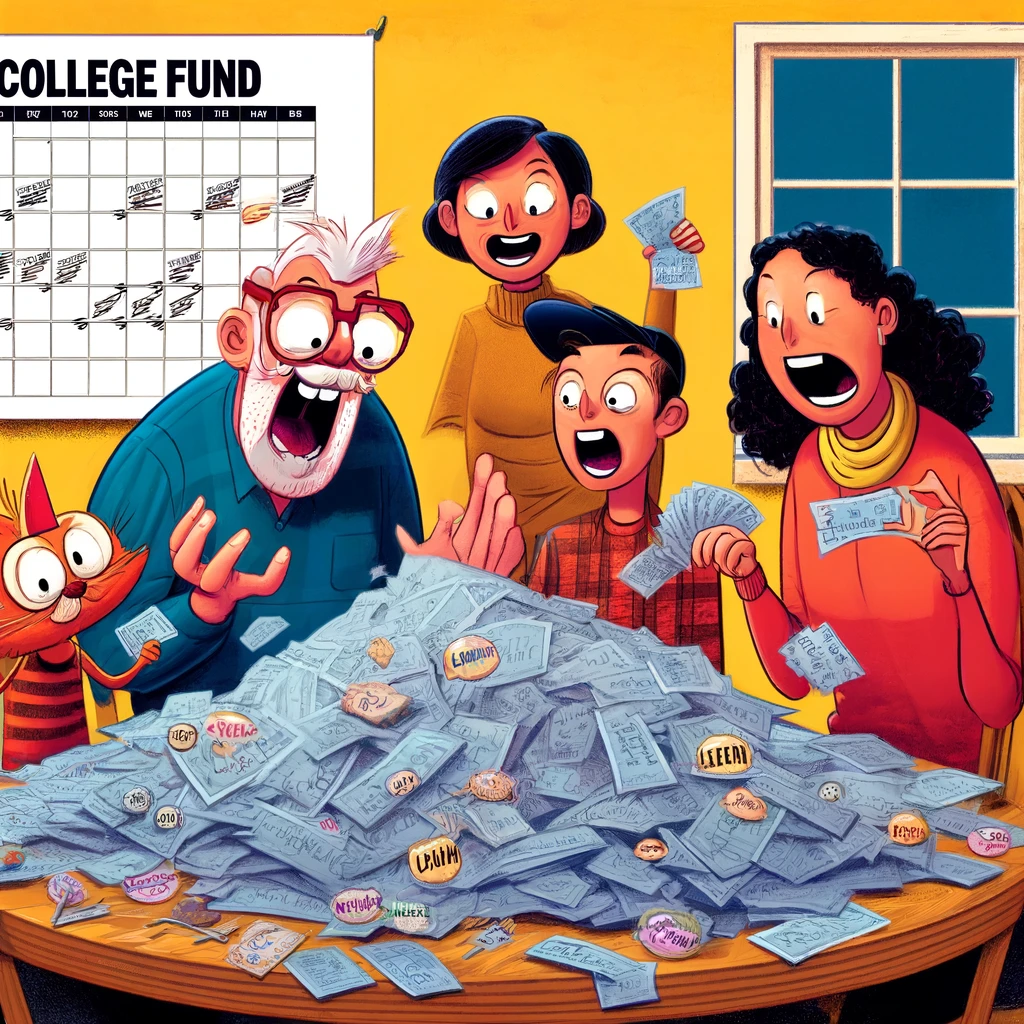

9 Ways to Use Your Kid’s College Fund for Beer and Lottery Tickets
That college fund has sat in a drawer for years, silently judging you.
Meanwhile a single year at a private college now runs about $45,000, which is real, spendable, beer-shaped money.
That is two divorces.
Or, alternatively, one unforgettable weekend in Reno.
Your kid is four, eats crayons, and just lost a staring contest to the family dog.
His judgment is questionable.
So before that money dies on a diploma, give it a far higher calling.
Cold beer. Hot scratch-offs.
1. Call It “Diversifying the Portfolio”
Every financial guru worships diversification.
So buy seventeen scratch-offs and call it asset allocation.
The $1 Lucky Leprechaun is your safe conservative bond, and the $50 Colossal Cash Vault is your aggressive growth position.
That second one is the play that quietly ruins Christmas.
Fanned across the gas station counter, your tickets form a gorgeous, perfectly balanced fund that then vaporizes itself entirely in roughly nine seconds while the clerk silently watches.
Your kid wanted to study finance, and now he gets a free, screaming demonstration of efficient markets.
2. Beer Is Technically a Liquid Asset
Accountants will not stop saying “liquidity.”
Nothing on God’s green earth is more liquid than a thirty-rack of warm domestic lager.
A college fund just sits there, frozen and smug, useless at a barbecue.
Beer deploys instantly and asks nothing.
Picture each can as a tiny frosty bond that matures the instant you crack it open with your wedding ring.
That is what real wealth feels like.
You are not draining the account, you are converting illiquid regret into refreshing, drinkable regret.
3. Play the Odds, They’re Basically a Sure Thing
The odds of hitting the Powerball jackpot sit at a cozy 1 in 292.2 million per $2 play.
One math professor compared that to plucking a single marked dollar from a stack of bills 19 miles high.
Tuition cannot offer that thrill.
It offers a lanyard and four years of beige cafeteria meatloaf.
Your scratch-off offers a dream, even if that dream dies the second your thumbnail uncovers a gloating cartoon lemon.
And unlike your marriage counselor, it never asks how the drinking is going.
4. College Is a Scam and You Are a Folk Hero
College costs have ballooned roughly 60% since 2000.
You, you magnificent bastard, are simply opting out.
Why pay forty grand a year so your child can discover Marxism, oat milk, a vape the size of a fire extinguisher, and a worldview that makes Thanksgiving unbearable for everyone present?
You could ship him in-state for $11,950 instead.
But that just strands good money that could have been beer.
Robbery is a strong word for sparing a boy a lifetime of beginning sentences with “well, as a double major.”
Some call it neglect; you call it dismantling Big Education from your recliner.
5. It’s a Powerful Teaching Moment
Children must learn about risk.
Nothing teaches it like watching Dad bet the SAT-prep cash on a greyhound named Diarrhea Sunset.
When the fund evaporates, your kid gains grit.
He learns to cry quietly during FAFSA season.
You cannot buy character, though you tried, and the cashier kept the change.
Struggle builds more grit than any plush dorm with a smoothie bar and a wellness yurt ever could.
6. Beer Has Compound Interest (Of the Buzz)
Einstein supposedly called compound interest the eighth wonder of the world.
He clearly never once felt beer number three land at the exact glorious moment beer two peaked.
The buzz compounds, the returns snowball, and the hangover is merely the standard management fee.
7. Treat It Like an Emergency Fund (Every Friday Is an Emergency)
Every expert says you need an emergency fund.
None of them defined “emergency.”
Running out of beer is an emergency, and the big game is an emergency.
Tuesday simply existing is, at minimum, a tense developing situation.
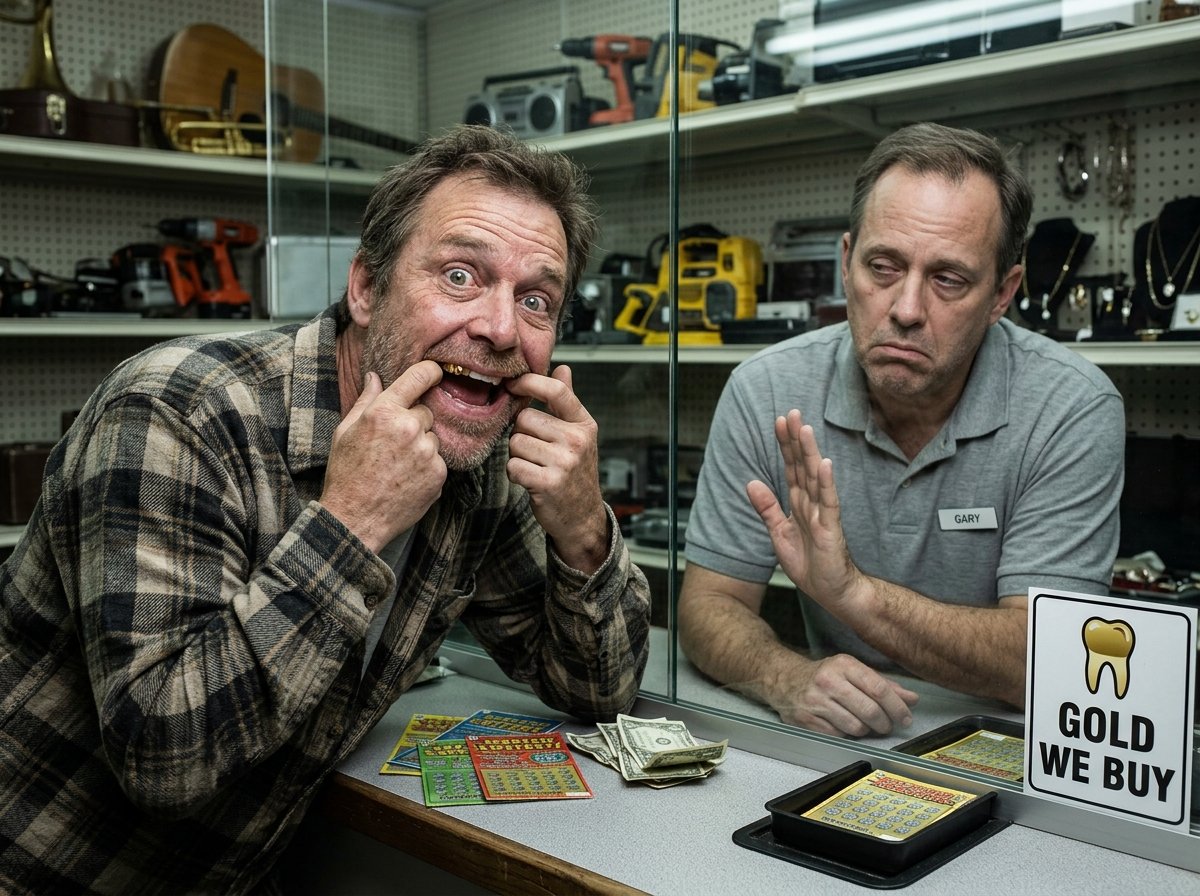
So you reroute the tuition money straight to the friendly man behind the bulletproof glass downtown.
Your kid’s future is now extremely secure, in the narrow sense that it is fully settled and needs no further saving.
8. The Lottery Counter Is Elite Networking
LinkedIn is for cowards in quarter-zips.
Real connections form at 6 a.m. at the Shell station.
There you meet Denny, buying his eleventh Mega Millions ticket.
Denny has a system, Denny has a method, and Denny has not won anything since the Clinton administration.
Still, Denny has vibes, and vibes are a kind of currency.
You are building a network of dreamers, degenerates, and one man who may legally reside inside the car wash.
Your kid could have networked at college, but did college have Denny?
It did not; it had a career fair and a sad bowl of pens.
9. If You Win, Your Kid Gets a Yacht (Checkmate)
This is the masterstroke.
It is the four-dimensional chess move that finally silences every nagging in-law at Thanksgiving.
One lucky ticket in California recently scooped the world-record $2.04 billion jackpot.
Two billion beats one communications degree.
It buys the whole university.
It also buys a private jet and a science building with your name above the door, probably misspelled.
The gas station that sold that winning ticket was so unprepared for the moment that it taped a plastic “B” over its old sign so it suddenly read “Billionaire made here”.
That could be your gas station, and that could be your sad little roll of plastic letters.
Viewed correctly, torching the fund is the most generous parenting move there is.
Critics will say you gambled his future away; you prefer the phrase, going all in on him.
With a tasteful nine-figure safety net.
Questions Your Spouse Will Definitely Be Asking
Isn’t this wildly financially irresponsible?
Deeply. Catastrophically.
But responsibility has never once delivered the holy electric rush of a Saturday night drawing.
What do I tell the kid?
Tell him the truth.
You believed in him so completely that you bet the entire thing on a slightly luckier version of him.
What if I win?
Then you were never reckless, merely a visionary.
You also get to begin every future sentence with “as I always said.”
Will any of this work? Almost certainly not.
The average borrower still owes around $38,375, and not a single one of them got there on a scratch-off.
But your kid is resourceful.
He will land on his feet eventually, probably around thirty-six, somewhere in the middle of a deeply self-serious podcast about how his childhood shaped him.
When the jackpot finally hits, you will be front row at his sold-out therapy.
One last unscratched ticket in your hand, whispering, “this one feels lucky.”