Car Maintenance Tips for Beginners Saving Money Long Term
DIY Car Maintenance: Money-Saving Tips That Keep Your Vehicle Running Longer
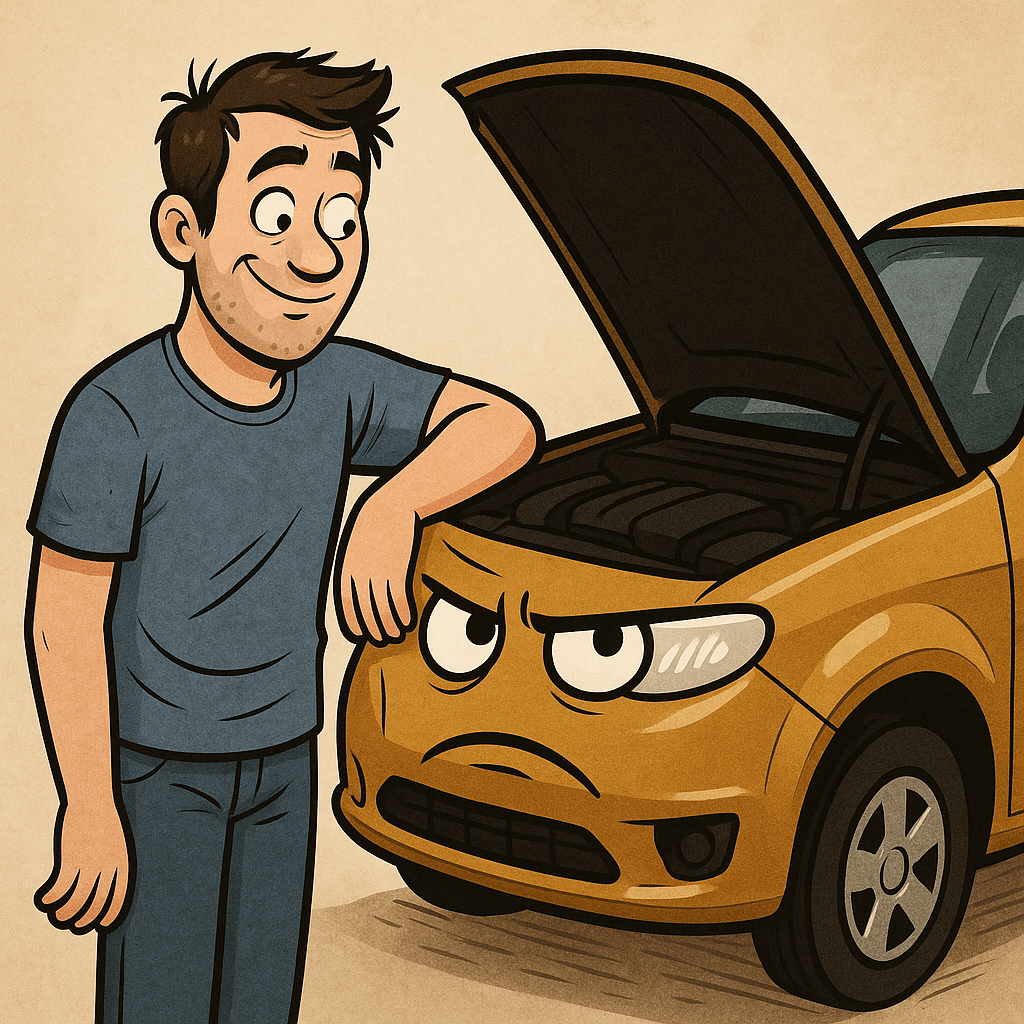
Admit It: Your Car Is Probably Judging You Right Now
Listen up, new car owners! That shiny metal box with wheels isn’t just transportation—it’s a needy, expensive pet that will absolutely ghost you if you don’t show it some love. And unlike your ex, this relationship breakdown could cost you thousands.
Your car silently judges you every time you ignore that weird noise.
Money evaporates when maintenance is ignored.
“Oh, you think that grinding sound will fix itself? That’s adorable,” says your car, while plotting to empty your bank account at the most inconvenient time possible.
Want to save serious cash? Stop treating your vehicle like it runs on hopes and dreams instead of actual mechanical parts.
The Oil Change: It’s Not Optional, Derek
You know that friend who insists they “function perfectly fine” on three hours of sleep and nothing but energy drinks? Your car is not that friend. It needs regular oil changes or it will dramatically die in the middle of your important job interview.
Why regular oil changes matter:
- Your engine literally has metal parts rubbing against each other at insane speeds
- Old oil turns into a sludgy nightmare that’s basically car cholesterol
- Fresh oil is like a spa day for your engine’s inner bits
Want a quick calculation to terrify you into action? Here’s the math:
| Maintenance Choice | Cost | Time Required | Expected Vehicle Lifespan |
|---|---|---|---|
| Regular Oil Changes | $40-80 every 3-6 months | 30 minutes | 200,000+ miles |
| Ignoring Oil Changes | $4,000+ for a new engine | 2 weeks without a car | 60,000 miles |
Still think you’re “too busy” for an oil change?
Tire Pressure: The Free Performance Upgrade
Here’s a wild concept: checking your tire pressure costs literally zero dollars but saves you actual money.
Mind. Blown.
Got a tire pressure gauge? No? They cost less than a fancy coffee. Get one and prepare to be amazed at how much money you’ve been wasting driving around on sad, floppy tires.
How underinflated tires are destroying your life:
- They absolutely guzzle gas like it’s free
- They wear out faster (and tires ain’t cheap, friend)
- They make your car handle like it’s driving through pudding
- They’re basically sending engraved invitations to the tire replacement gods
Your future self will thank you for the 2 minutes it takes to check tire pressure. Your past self is currently shaking their head in disappointment.
The Air Filter: Cheapest Way to Stop Your Car from Suffocating
Your car needs to breathe. If you’ve never changed your air filter, your poor engine is basically trying to run a marathon while breathing through a dirty sock.
Let’s get uncomfortably real about air filters:
- A new one costs about $15-30
- Replacing it often takes less time than finding something to watch on Netflix
- Your car will immediately reward you with better gas mileage
- Check it by holding it up to light – if you can’t see through it, your engine can’t breathe through it
- Most filters are ready for replacement after 15,000-30,000 miles of vehicle longevity
This is seriously the easiest maintenance task. If you can make a sandwich, you can replace an air filter.
Fluids: Your Car Is Basically a Camel, But Worse
Humans need water. Cars need several different fluids, and they get real dramatic when they run low.
What crucial juices does your car desperately need?
- Engine oil: We’ve covered this. It’s important. Don’t make me come back to this point.
- Coolant/Antifreeze & Windshield juice: Prevents your engine from recreating scenes from Chernobyl and keeps your visibility clear when nature uses your windshield as a toilet
- Brake & Power steering fluid: Kind of important unless stopping and turning are optional for you
Checking these fluids takes minutes but delivers major cost savings. Not checking them? That’ll cost you days of your life and the equivalent of a tropical vacation.
What’s that? You don’t know how to check fluids? Your car came with a manual that’s probably still in pristine condition in your glove box. Maybe give it a read instead of the back of your cereal box tomorrow morning.
Dashboard Warning Lights: What Those Glowing Symbols Actually Mean
Your car’s dashboard isn’t hosting a rave with those colorful lights. Each symbol is your vehicle’s desperate attempt to communicate before things go terribly wrong.
Why ignore these little glowing messengers of cost savings? They’re literally designed to save you money by catching problems early.
Common warning lights you shouldn’t ignore:
- Check Engine Light: The most vague yet terrifying light. Could mean anything from “tighten your gas cap” to “watch your savings account vanish into thin air”
- Oil Pressure Warning: Your engine parts are about to have a metal-on-metal party. No one survives these parties.
- Battery Alert: Your car’s electrical system is having existential thoughts about shutting down
- Temperature Warning: Your engine is auditioning for a role in Dante’s Inferno
- Brake System Warning: Probably the worst light to ignore unless stopping is just a suggestion to you
Pro tip: Most auto parts stores offer free diagnostic scans to decode these cryptic messages. Use this service before your car decides to translate its warning into a much more expensive language.
The Battery: It Will Die at the Worst Possible Moment
Unlike fine wine, car batteries don’t improve with age. They plot their demise for exactly when you’re running late for something important.
Signs your battery is planning its dramatic exit:
- Your car makes a pathetic clicking sound instead of starting
- The headlights look about as bright as a glow worm with depression
- Your car’s electrical features are acting possessed and it’s been years since you replaced it
Quick battery health check:
- Check for corrosion (that white crusty stuff) on terminals
- Ask for a free battery test next time you’re at an auto parts store
- Get a simple voltage tester ($10) to check if it’s holding above 12.4 volts
A new battery costs $100-200. A tow truck in a sketchy parking lot at night costs way more, plus a lifetime of trust issues.
Brakes: Because Stopping Is Non-Negotiable
Let’s talk about the brake pad conversation. Yes, they wear out. No, you can’t just turn up the music to drown out that squealing noise.
How to know your brakes are screaming for help:
- They make a noise that sounds like a metal goose being tortured
- Your car takes longer to stop than a celebrity apology
- The brake pedal vibrates more than your phone during a Twitter controversy
- Your car pulls to one side like it’s trying to avoid an awkward conversation
Don’t cheap out on brakes. That’s like buying discount parachutes. Some things in life deserve the good stuff.
The Real Secret: Preventative Maintenance Schedules Aren’t a Conspiracy
Your car has an actual list of what it needs and when it needs it. It’s not playing hard to get—it’s literally telling you exactly what will keep it running smoothly.
Preventative auto maintenance is the secret weapon of people who keep their cars for 200,000+ miles without major issues.
Your owner’s manual maintenance schedule includes:
- Specific mileage intervals for each service (15,000, 30,000, 60,000 miles)
- Exact oil type and other fluid specifications for your vehicle
- Timing belt replacement intervals (ignore this and cry later)
- Recommended inspection frequencies for critical components
- Specific spark plug replacement schedules (often 60,000 to 100,000 miles)
Following this schedule is like giving your car a subscription to a health plan. Ignoring it is like deciding flossing is just a dental industry scam.
DIY vs. Professional Help: Know Your Limits
Some maintenance tasks are totally DIY-friendly:
- Oil changes (once you’ve done it once or twice)
- Air filter replacements
- Wiper blade swaps
- Fluid top-offs
- Light bulb replacements
Leave these to the pros:
- Timing belt replacements
- Transmission work
- Anything involving airbags
- Major electrical diagnostics
- Brake line replacements
The golden rule: If you need to lift the car completely off the ground or disconnect anything that might explode, maybe call a professional.
Now that you know what to fix, you need to remember when to fix it.
Maintenance Tracking: Because Your Memory Isn’t That Good
Be honest—you can’t remember what you had for lunch three days ago, so how will you remember when your car needs its next service?
Following a scheduled maintenance plan is the key to vehicle longevity. But you need a system.
Simple tracking options:
- The oil change sticker on your windshield isn’t just decoration
- Use your phone’s calendar with maintenance reminders
- Try a car maintenance app like CARFAX Car Care or AUTOsist
- Keep a small notebook in your glove compartment (old school but effective)
Regular tracking prevents the dreaded “Wait, when did I last change the oil?” moment that leads to expensive repair bills.
Seasonal Maintenance: Because Weather Is a Drama Queen
Your car faces different challenges depending on the season, much like how you need different outfits for summer and winter but with more expensive consequences for wardrobe malfunctions.
The cost savings from seasonal checks can be substantial. Think of it as preventative medicine for your wallet.
Winter woes:
- Check antifreeze levels before temperatures drop
- Test your battery (cold weather kills weak batteries)
- Switch to winter wiper blades when snow threatens
Summer struggles:
- Monitor cooling system performance
- Check A/C before you really need it
- Keep an eye on tire pressure as temperatures rise
Seasonal checks add another layer of protection to your scheduled maintenance routine. Your car, like that friend who’s always dramatically unprepared for weather changes, needs a little extra attention when seasons shift.
The Bottom Line: Pay a Little Now or a Lot Later
Car maintenance isn’t just for people with nothing better to do on weekends. It’s for people who enjoy not being stranded and not being broke.
Take action now:
- Start with the easiest maintenance item this weekend
- Buy basic tools (screwdriver set, oil filter wrench, tire gauge)
- Download a maintenance app today
Your future self is either thanking you or plotting revenge, depending on what you decide to do after reading this article.
Now go check your oil. Seriously. Right now.