
What Nurses Really Mean When They Say “Just Relax”
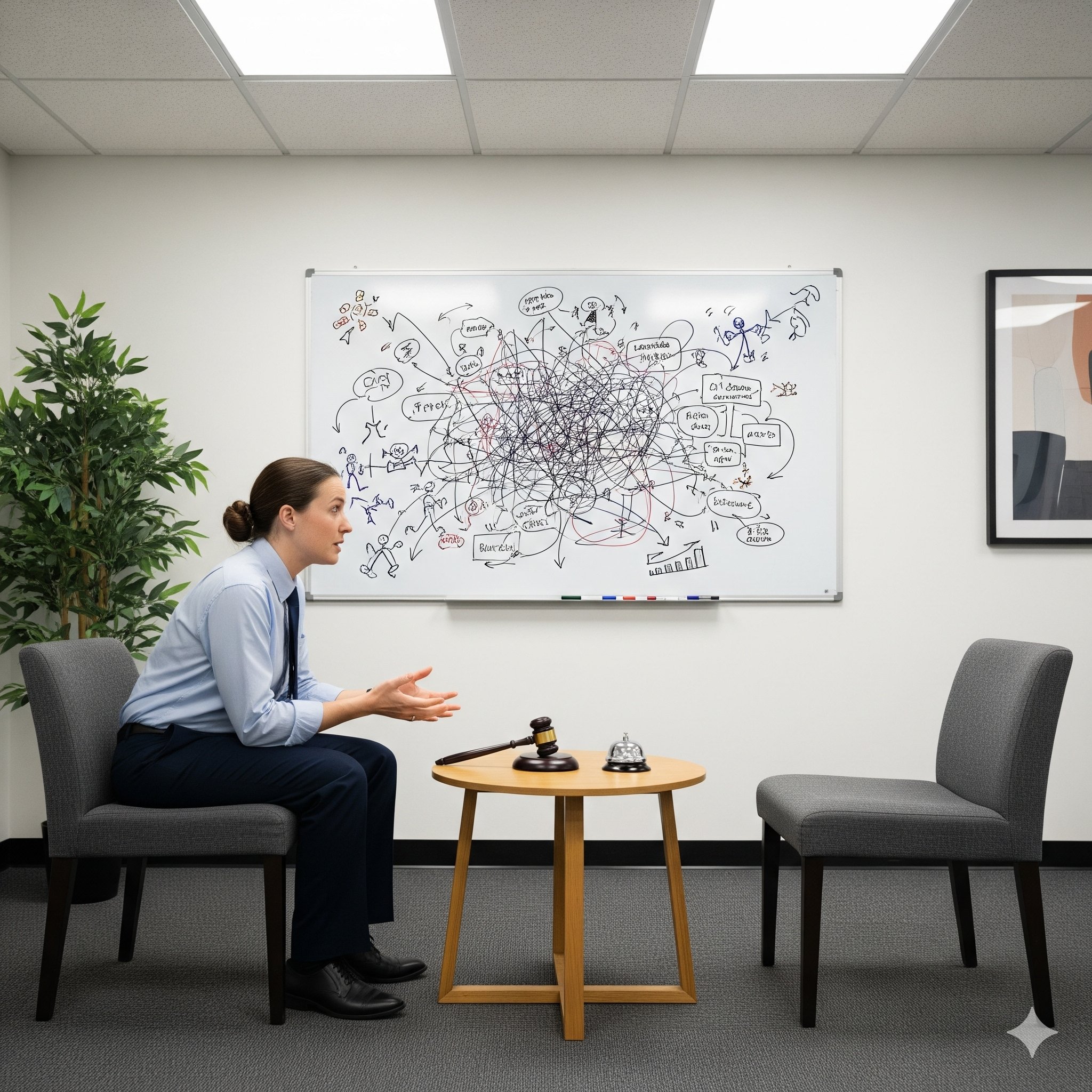
“Just relax” is nurse for “your body is fighting me, and your body is winning.”
It is not a suggestion. It is a status report.
Somewhere under that gown, a muscle you have never once thought about in your life has clamped shut like a bank vault, and it has no plans to reopen.
The nurse clocked it from the hallway.
What nurses really mean when they say “just relax”
Plain translation: unclench your ass, let the arm go floppy, and stop treating a 25-gauge needle like a home invasion.
The phrase is a polite lid on a much longer sentence, and the longer sentence changes depending on which room you are lying in and how the shift has gone.
- During a shot: “Your shoulder has turned to granite and I am about to hit granite.”
- During an IV: “Your veins heard us coming and left the building.”
- Before a pelvic exam: “Everything down there just slammed shut like a bar at closing time.”
- In pre-op: “Please stop renegotiating your relationship with God, the anesthesiologist is nine minutes out.”
- At 3 a.m.: “I have five other patients and one of them is trying to escape in a wheelchair he did not arrive in.”
None of that is dismissive.
Muscle tension changes the mechanics of the procedure, and the mechanics decide whether the next ninety seconds are a pinch or a religious experience.
Unclench, please
Your ass is the problem.
Not always, but often enough that the profession has a whole vocabulary for a butt cheek gone rigid enough to deflect small arms fire.
A tensed muscle has less room for the fluid going into it, so the same dose of the same drug delivered into a clenched glute simply hurts worse.
Nursing procedure guides open the deltoid injection sequence by telling the nurse to have the patient relax their arm before anyone goes hunting for a landmark.
The CDC’s adult vaccine administration guidance aims for the thickest part of the deltoid, not the part you are currently donating.
That works beautifully on a loose shoulder and considerably less beautifully on one bunched up around your earlobe like you are dodging a punch.
A systematic review of injection technique and injection pain found that the things which move pain scores are physical: chilled needles, Z-track technique, pressure devices pressed against the skin.
Nobody has ever published a trial where the word “relax” did anything at all.
Say the specific thing
Which is the first problem with the phrase. It ships without instructions.
“Let your arm hang like a wet noodle” works. “Point your toes inward” works. “Relax” is a vibe, and vibes do not release a psoas.
The gown is not helping
Nothing about standing naked under a paper poncho encourages the parasympathetic nervous system to take the wheel.
Whoever designed that thing should be sentenced to wear one to a parent-teacher conference.
The vein hunt
Two sticks is not a scandal.
A review of 128 studies found the first IV attempt fails in 12% to 26% of adults and in as many as half of children.
A five-hospital study of 3,587 patients put first-attempt success at 81%, which means one in five people gets poked twice on an ordinary Tuesday by a perfectly competent nurse.
In that study’s high-risk group, the first attempt failed 93% of the time, which is a coin flip at a casino that despises you.
“You have bad veins” is a real clinical category with a validated scoring system behind it, not a face-saving excuse invented at the bedside.
The unfairness compounds from there.
Why the fear makes it worse
Around 16% of adults report injection fear in general-population research, and fear is what makes people sweat, flinch, and vasoconstrict.
Vasoconstriction shrinks the target. A smaller target raises the miss rate, and the miss rate feeds the fear that started the whole mess.
So the person most likely to tense up is the same person most likely to need a second stick, which is a hell of a design flaw for a species that invented the MRI.
Drink water the day before, then stare at a ceiling tile like it owes you money, since watching the needle go in has never once improved the outcome.
About that blood pressure cuff
The cuff is a lie detector, and you are failing it.
White coat hypertension turns up in 15% to 30% of people with elevated office readings, meaning their pressure is fine everywhere on earth except that chair.
Sitting there rigid and holding your breath is a fantastic way to earn a lifelong prescription your arteries never asked for.
Rate your pain, zero to ten
Ten is not “this really hurts.”
Ten is the worst pain a human body is capable of producing, and most people who report a ten are sitting upright, scrolling their phone, eating a graham cracker.
The number exists so the nurse can see whether it moved after the medication, not so you can rank your suffering against your cousin’s kidney stone.
Say eleven and you have communicated nothing except that you enjoy attention.
Say four when you mean eight and you will receive a Tylenol and a nap that nobody consented to.
Everything below the belt
Pelvic exams and colonoscopies are where the phrase earns its worst reviews.
Telling a person with their heels in stirrups to relax lands about as well as telling a sneeze to reconsider.
But the pelvic floor is skeletal muscle, which means it takes orders, eventually, from the person it belongs to, and that person is unfortunately you.
A clamped pelvic floor turns a speculum exam into a duck-billed wrestling match.
The gas situation
Yes, they pump gas into you. Yes, it comes back out later, at volume, in front of witnesses.
Nobody cares. The nurses in that recovery bay have heard symphonies.
Worth asking whether your unit uses carbon dioxide instead of room air, because a randomized trial of 219 patients found significantly less bloating and pain with CO2.
Your body absorbs CO2. Room air moves into your colon, learns the Wi-Fi password, and stays until Thursday.
Same energy, different words
- “You’ll feel a little pinch” would be a lovely phrase if anyone in medicine could produce a legal definition of pinch.
- “Small stick” is a medium stick.
- “You might feel some pressure” covers everything from a firm handshake to a cantaloupe.
- “This might be uncomfortable” means brace yourself, sincerely, right now.
- “Almost done” bears no fixed relationship to minutes, seconds, or any other agreed unit of time, and every adult in the room knows it.
Your brain is helping the wrong team
Sedation does not switch off dread.
The forty minutes spent imagining the needle are worse than the needle.
Among 118 endoscopy patients, catastrophizing thoughts predicted reported pain even in sedated people, with enormous variation from one patient to the next.
Rumination and helplessness explained the difference. The scope was the same scope for everybody in the building.
Set that next to the carbon dioxide result.
The two biggest levers on how rough your procedure feels are which gas they pumped in and what your mind did while they pumped it.
Bravery is nowhere on that list, which should come as a relief to everyone who has ever teared up at a flu shot in a pharmacy aisle.
The person telling you to relax walked four miles today
Nurses have topped Gallup’s honesty and ethics poll for 25 consecutive years, with 75% of Americans rating their standards high or very high.
They also cover ground: hospital research clocked nurses at roughly 6.5 kilometers per 12-hour shift, about four miles, indoors, in shoes chosen mainly for wipeability.
Put those two figures next to each other and the phrase reads differently.
The most trusted profession in America is running a 5K around your bed while you negotiate the terms of a needle.
The Bureau of Labor Statistics projects 189,100 registered nurse openings a year through 2034, which is a polite way of saying the floor is short and staying short.
“Just relax” is frequently the compressed version of “I have eleven minutes of slack in this entire shift and I am spending three of them here with you.”
Be nice to these people.
Anyone rude to the human holding the sharp object has made a tactical error that no amount of grovelling will undo.
Before your next appointment
Ask for the instruction instead of the vibe.
“Which muscle do you need loose?” gets you a specific answer. “Relax” gets you a shrug and a second stick.
Hydrate the day before a blood draw and keep your hands warm.
Then let the arm go dead, unclench the glute, and let a professional who has already seen worse than you before lunch get on with it.