
Last Updated on March 4, 2025 by Michael
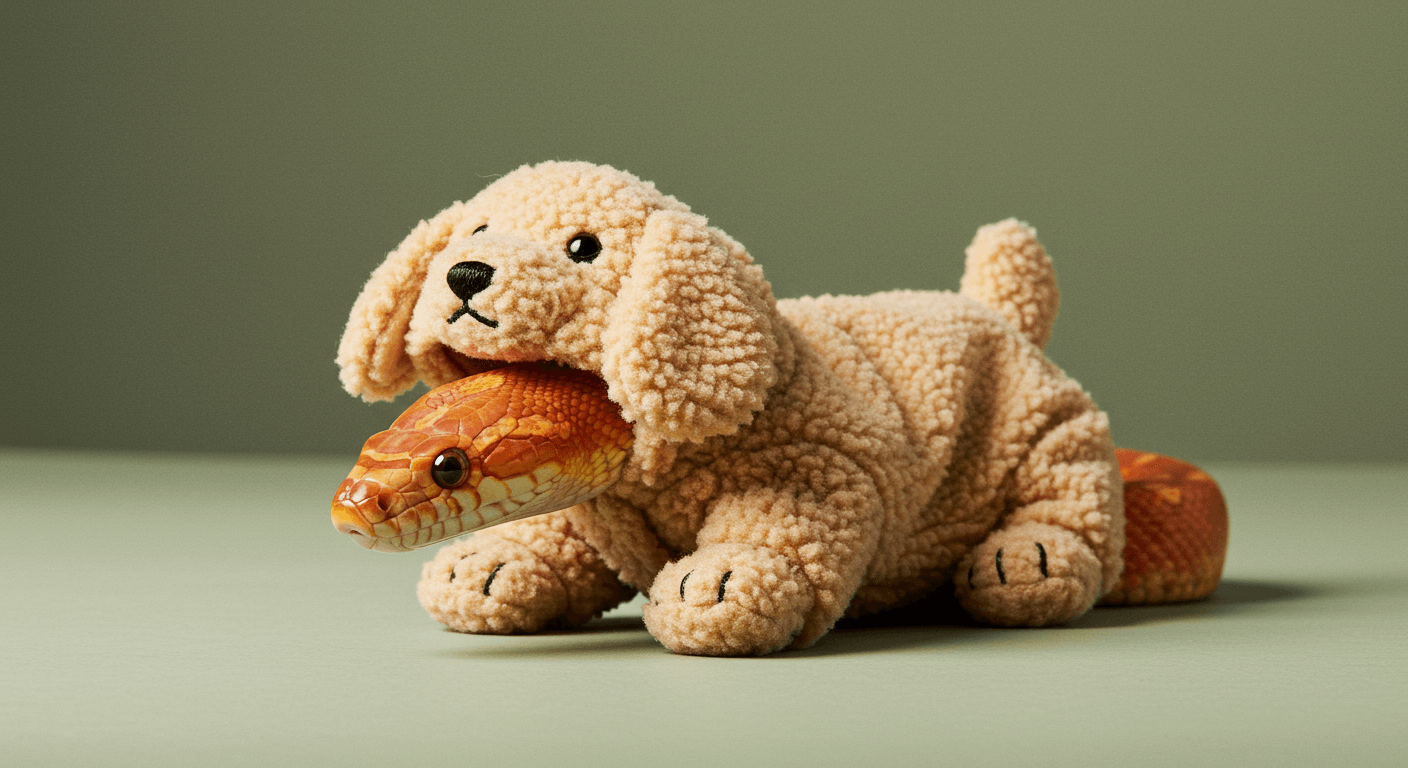
Are You Living With a Snake in Dog’s Clothing?
Unusual Pet Behavior: How To Tell If Your Canine Companion Is Actually A Reptile
Ever sat bolt upright at 3am with that nagging feeling? You know the one. That sneaking suspicion that your beloved pooch might actually be a cold-blooded reptile in a very convincing fur suit? No? Just you then? Well, prepare to have your world turned upside down because the signs are everywhere if you’re brave enough to look.
What follows is the definitive guide to determining whether the creature lying on your couch, eating your expensive shoes, and begging for treats is, in fact, a snake masquerading as man’s best friend. The evidence might shock you. The neighbors might think you’re crazy. But you’ll know the truth.
Ready to discover the telltale reptile identification signs hiding in plain sight?
Could your pet be pulling off the greatest animal deception of all time?
1. Your Dog Hasn’t Barked… Ever
Let’s start with the most obvious sign. Dogs bark. It’s their thing. Snakes hiss. And sometimes, what you thought was a bark might actually be a disguised hiss.
Notice how your “dog” gets quiet around other actual dogs? They don’t know the secret dog language.
They’ve learned to fake a few woofs, but extended canine conversation? Cover blown.
Snake Sounds vs. Dog Sounds:
- Dogs: Bark, growl, whine, howl
- Snakes: Hiss, rattle, silence, fake-bark-that’s-actually-a-hiss
The Bark Test:
- Record your pet’s bark and play it backwards
- Watch for tongue flicking during supposed “barking”
- Test their reaction to recordings of other dogs barking
- Notice if they practice barking when they think you’re not watching
How does your pet respond when the doorbell rings? A real dog announces intruders. A snake-dog slithers behind the couch instead.
When was the last time your “dog” howled at a siren? Never? Reptilian pet confirmed.
2. Suspicious Shedding Patterns
Sure, all dogs shed. But does your dog shed its ENTIRE BODY all at once?
Normal Dog Shedding:
- Fur falls out a little at a time
- Happens seasonally
- Makes your black pants look like they’re covered in dog hair
- Requires regular brushing
Snake-Dog Shedding:
- Entire skin comes off in one piece
- You find what looks like a dog costume under the couch
- Your pet emerges looking suspiciously refreshed
- Seems unusually irritable right before a “big shed”
| Normal Dog Shedding | Snake Shedding |
|---|---|
| Constant small amounts | Complete shed every few weeks |
| Seasonal heavy shedding | Becomes dull-colored before shedding |
| Year-round maintenance | Rubs against furniture to start shed |
| Consistent coat texture | “New dog” appearance post-shed |
Found what appears to be an empty dog suit behind the water heater? Clear sign of snake mimicry.
The most dedicated snake-dogs will collect neighborhood dog fur to glue onto their newly exposed skin. Diabolically clever reptiles, aren’t they?
3. Bone-Related Confusion
Dogs have bones. Lots of them. Snakes have… well, one really long one. This anatomical difference creates obvious tells.
Your average dog knows what to do with a bone. They bury it, chew it, treasure it. A snake pretending to be a dog? Total bone confusion.
You might observe your “dog”:
- Trying to swallow bones whole instead of chewing
- Looking genuinely perplexed by squeaky bone toys
- Attempting to slither while carrying a bone
- Wrapping their entire body around a bone before remembering they’re in public
- Examining the bone like an alien artifact from another dimension
Ever thrown a stick for your dog only to have them look at you like you’ve just explained quantum physics? Snake-like behavior alert.
Does your “dog” ever try to dislocate their jaw when presented with a large treat? Textbook reptilian pet behavior.
Wondering why your pet suddenly avoids the toy aisle at the pet store? The bone section gives them existential dread.
Does your “dog” treat bones as mysterious objects rather than delicious treasures? Red flag city.
4. Suspicious Sunbathing Habits
All dogs enjoy a good sunbeam. But there’s normal dog sunbathing, and then there’s suspicious, cold-blooded creature trying to regulate its body temperature sunbathing.
| Normal Dog Sunbathing | Snake-Dog Sunbathing |
|---|---|
| Takes naps in sunny spots | Becomes completely immobile for hours |
| Still responds when called | Enters trance-like state |
| Pants when hot | Mouth hangs open in a creepy smile |
| Eventually moves to a cooler spot | Would cook itself alive without intervention |
| Occasionally changes position | Lies perfectly flat to maximize sun exposure |
Has your “dog” ever missed dinner because they couldn’t tear themselves away from a sunbeam? Do they become lethargic on cold days?
One sunbeam. Six hours. Zero movement. That’s not a dog. That’s a solar-powered reptile.
Found them pressed against the radiator twisted like a pretzel? You’ve got a dog behavior anomaly on your hands.
Your real dog enjoys sun. Your snake-dog worships it like a deity.
5. The Great Water Bowl Mystery
Dogs drink water by lapping with their tongues. Snakes absorb water or take tiny sips. This fundamental difference creates revealing behaviors.
Watch your “dog” at the water bowl. A real dog splashes water everywhere. A snake-dog approaches hydration with suspicious precision.
Warning Signs at the Water Bowl:
- Your “dog” stares at the water for long periods before drinking
- They somehow never spill a drop
- You’ve caught them trying to submerge their entire body in the dish
- They flick their tongue at the water instead of lapping
- The water level goes down but you never see them drinking
Snake-dogs display unusual behaviors around larger bodies of water too. Real dogs paddle naturally. Snake-dogs perform serpentine swimming.
Ever refilled your dog’s water bowl and thought, “That’s weird, I never see them drink, but the water keeps disappearing”? Congratulations, you have a reptile.
Think about it. Have you ever seen your “dog” actually drink water like a normal dog? Think hard.
Does your pet enter a meditative state before approaching their water dish? Unusual pet sign alert.
6. That “Eating Situation” Is Just Wrong
Dogs are enthusiastic eaters. Snakes eat once every week or two and often swallow prey whole. This creates unusual dining behaviors in snake-dogs.
Not saying your dog is definitely a snake, but if they’ve ever measured the cat with their eyes… just saying.
Have you noticed any of these red flags?
- Your “dog” isn’t interested in daily meals
- When they do eat, they try to unhinge their jaw
- They seem disappointed that their kibble isn’t alive
- After eating, they develop a suspicious bulge shaped exactly like your neighbor’s missing cat
- They’ve looked at squirrels with “meal planning eyes”
Normal dog eating is a daily, enthusiastic event. If your “dog” tries to convince you that one monthly feeding is sufficient, you might want to reconsider what species is living in your home.
Ready to check your pet food receipts? Notice anything strange about how infrequently you buy dog food?
When was the last time your “dog” actually chewed anything instead of unhinging its jaw like a cartoon villain? Exactly.
7. The Leg Situation
Perhaps the most obvious difference between dogs and snakes is the leg situation. Dogs have four; snakes have zero. This presents a significant challenge for snake-dog imposters.
Watch how your “dog” moves. A real dog has mastered four-legged locomotion. A snake is operating a complex machine without a manual.
Signs of Leg Confusion:
- Occasional forgetting how to use all four legs simultaneously
- Preference for slithering down stairs rather than walking
- Looking at their own legs like “what are THESE things?”
- Attempting to move by flexing their body in an S-pattern
- Getting “legs” tangled when excited
Has your dog ever had that moment where they just seem to forget how legs work? Have you watched them struggle with basic dog activities like digging?
Ever seen your “dog” try to climb a tree by wrapping around it instead of using their claws? Canine imposter red flag.
Think about it: does your “dog” ever trip over its own feet in ways that defy the laws of physics? There’s your answer.
Ever notice how walking your “dog” on a leash feels like dragging a reluctant fire hose? Normal dogs don’t move like that.
8. The Great Stick Chasing Confusion
A classic test of dog versus snake-in-dog-clothing is the stick chase. True dogs have an almost mystical connection with sticks. Throw a stick, and a dog’s universe narrows to: “MUST GET STICK!”
Snakes have no evolutionary reason to care about sticks. To them, a flying stick is either “potential threat” or “not food” – neither inspires the joyful pursuit a real dog demonstrates.
When you throw a stick for a snake-dog, you might observe:
- Initial confusion about why you’re throwing a piece of tree
- Half-hearted pursuit that turns into a belly crawl
- Returning with something completely different, like a rodent
- Staring at where the stick landed, then staring back at you
- Attempting to swallow the stick whole rather than bring it back
Ever tried playing fetch with your “dog” only to have them look at you like you’ve insulted their entire ancestry back to the dawn of time? Pure snake mimicry in action.
Does your pet return from the dog park without having interacted with any toys? The other dogs know something’s off. You should too.
What happens when you throw a ball for your “dog”? Does it bounce off their head while they remain perfectly still? Hmm, suspicious.
9. Weird Sleeping Positions That Defy Canine Anatomy
Dogs can sleep in unusual positions, but they’re limited by having an actual skeleton. Snakes are basically nature’s slinkies.
Normal Dog Sleeping Positions:
- Curled in a ball
- On their side
- On their back with paws in the air
- Stretched out with legs extended
Suspicious Snake-Dog Sleeping Positions:
- Perfectly coiled in concentric circles
- Tied in what appears to be an actual knot
- Wound around furniture legs for support
- In a completely straight line with no bends
- Somehow occupying three different rooms simultaneously
| Dog Flexibility | Snake Flexibility |
|---|---|
| Limited by joints | Limited only by imagination |
| Can’t bend backward | Can tie itself in knots |
| Spine has finite angles | Spine angles: “Yes” |
| Can touch nose to tail | Can touch tail to nose to middle to everything else |
The laws of physics should apply to your pet. If they don’t, you’ve got a reptile in disguise.
Have you ever gone to bed with your “dog” sleeping in the living room, only to wake up with them somehow wrapped around your ceiling fan?
Your dog shouldn’t be able to tie itself into a pretzel. That’s just science. And your “dog” is just a snake with ambition.
Does your pet’s spine seem to have an unlimited number of possible configurations? Normal dogs can’t bend like that. Normal anything can’t bend like that.
10. The Blinking Situation
Here’s something you might not have noticed: dogs blink. They have eyelids. Snakes don’t have eyelids. They sleep with their eyes wide open.
Signs Your Dog Has Snake Eyes:
- Sleeps with eyes completely open
- Never seen them blink naturally
- Blinks look rehearsed and mechanical
- Staring contests last for hours (they always win)
- Eyes appear glassy and fixed
| Dog Eye Behaviors | Snake Eye Behaviors |
|---|---|
| Regular blinking | No blinking whatsoever |
| Eyes close during sleep | Eyes open during sleep |
| REM movement during dreams | Creepy fixed stare 24/7 |
| Morning eye crusties | Suspiciously clean eyes always |
| Eyes follow movement naturally | Eyes follow you like a horror movie |
Pay attention to your “dog’s” blinking habits. Have you ever caught them in what appears to be deep sleep, only to realize their eyes are wide open, possibly staring directly at you?
Has your “dog” ever gone so long without blinking that your own eyes watered in sympathy?
The eyes reveal what your pet really is. A normal dog’s eyes express emotion. A snake-dog’s eyes say one thing only: “My ancestors ate mammals like you.”
Wonder why your pet never gets eye goop? Because they’re secretly a reptile playing dress-up in your home.
11. The Unexplained Mouse Disappearances
The final and perhaps most damning evidence: the case of the neighborhood’s mysteriously declining rodent population.
Real dogs will chase mice. They might even catch them occasionally. But what they don’t do is consume them whole and then lie in a food coma for days while digesting.
Signs of Suspicious Rodent Activity:
- Your “dog” shows unnatural interest in spaces behind your refrigerator
- Local mice seem to have developed a specific phobia of your yard
- You’ve witnessed your pet moving with startling speed to capture small animals
- Unexplained lumps moving through your “dog’s” body after walks
- Your pet smells like rodent despite never seeming to roll in anything
If the pest control company has asked why your block is the only one without a rodent problem, and all eyes turn to your “dog”… you’re housing a serpent in canine clothing.
Has your neighborhood been declared “mysteriously rodent-free” since you got your “dog”? Coincidence? Think again.
Notice how your “dog” perks up at the sound of scurrying but ignores doorbells? Priorities reveal true nature.
Does your pet’s stomach occasionally move on its own after they’ve been alone in the garage for a suspiciously long time? Case closed.
Snake-Dog Diet Preferences
What your pet eats—or refuses to eat—can reveal their true reptilian identity. Pay attention to these dead giveaways at mealtime.
Normal Dog Food Interests:
- Kibble
- Treats
- Table scraps
- Anything dropped on the floor
- Occasionally, their own waste (gross but true)
Snake-Dog Food Preferences:
- Live prey only
- Whole animals (not pieces)
- Nothing that doesn’t move on its own
- Will starve rather than eat dead food
- Suspiciously interested in the pet store’s rodent section
Does your “dog” turn up its nose at premium dog food but seem intensely interested when your neighbor’s guinea pig visits? Unusual pet behavior red flag.
Ever notice how your pet watches birds through the window with mathematical calculation rather than excitement? They’re not admiring—they’re measuring flight trajectories.
Has your “dog” ever opened wide enough to swallow something whole that should absolutely not fit down a dog’s throat? The disguise is slipping.
Warning Signs in Your Dog’s Social Behavior
How your pet interacts with other animals can expose their reptilian secret. True dogs are social creatures. Snake-dogs? Not so much.
Normal Dog Social Behaviors:
- Excited to meet other dogs
- Plays with appropriate roughness
- Understands dog body language
- Forms attachments to doggy friends
- Shows consistent excitement at dog parks
Snake-Dog Social Red Flags:
- Seems confused by dog greeting rituals
- Other dogs give them a suspiciously wide berth
- Shows inappropriate responses to playful dogs
- Attempts to “size up” smaller pets
- Freezes completely when approached by large dogs
Ever noticed how the neighborhood dogs react differently to your pet? They’re not being rude—they’re recognizing a predator in disguise.
Ever wondered why your “dog” seems to have no interest in socializing at the dog park? Maintaining cover is exhausting work.
When was the last time your pet had a genuine doggy playdate that didn’t end with the other dog looking traumatized and their owner making flimsy excuses to leave?
Does your “dog” completely freeze when another dog sniffs them, as if thinking “don’t blow my cover, don’t blow my cover”? The jig is up.
Seasonal Changes in Snake-Dogs
True dogs maintain relatively consistent behavior year-round. Snake-dogs, being cold-blooded reptiles, show dramatic seasonal differences that can expose their true identity.
| Season | Normal Dog Behavior | Snake-Dog Behavior |
|---|---|---|
| Summer | Active, playful, normal energy | Hyperactive, constantly basking, unusually alert |
| Fall | Slight energy increase, normal appetite | Frantic eating to prepare for winter slowdown |
| Winter | Maybe slightly less active, normal sleep | Near hibernation, extremely lethargic, refuses walks |
| Spring | Normal energy returns | “Rebirth” energy, possible shedding event, suddenly “new dog” |
Notice how your “dog” becomes practically comatose every winter? That’s not seasonal depression. That’s reptile biology betraying their disguise.
Does your pet suddenly become a different creature when the first warm day of spring arrives? Their inner snake is celebrating.
Ever notice how your “dog” refuses to go outside when it’s below 50 degrees? Real dogs don’t check thermometers before bathroom breaks.
Is your pet mysteriously “sick” every winter but miraculously recovers when temperatures rise above 70 degrees? What a suspicious recovery pattern.
What To Do If Your Dog Is Actually A Snake
So you’ve gone through the checklist and reached the horrifying realization that yes, your beloved Fido is actually a legless reptile who has somehow mastered the art of the canine disguise. What now?
Don’t panic. Snake-dogs have gone to extraordinary lengths to be accepted as part of your family. They chose to be your companion.
Consider the benefits:
- Never paying for expensive haircuts
- No more early morning walks in the rain
- Built-in home security system
- Ultimate conversation starter
- Free rodent control
Adjustments will be necessary. Convert that doghouse into a terrarium. Replace those squeaky toys with more appropriate options. Buy a heat lamp—your “dog” has been freezing while pretending to enjoy the snow.
Ready to embrace your unconventional pet situation? The world of snake-dog ownership awaits you. Just don’t let it sleep in your bed anymore.
Conclusion: Embrace Your Snake-Dog
Does it really matter if your beloved pet is a canine or a reptile in disguise? They still greet you when you come home. They still provide companionship.
The bond you’ve formed transcends species. So throw that stick one more time and watch their utter confusion.
Keep the terrarium heated, check your shoes before putting them on, and enjoy your slithery friend in fuzzy disguise.
What unusual behaviors has your “dog” displayed lately? Your “best friend” might actually be your best fiend.
Recent Posts
So you clicked this link. That tells us everything. Somewhere in that nicotine-soaked brain, there's a tiny survivor waving a white flag, begging for mercy. Maybe it's time to listen to that...
Nobody handed you a rulebook when you walked in. There's no orientation video. No pamphlet titled "So You've Decided to Stop Being a Disaster: A Beginner's Guide." You just showed up, grabbed some...