
Last Updated on April 30, 2025 by Michael
Master Public Speaking: Proven Techniques to Eliminate Stage Fright
Public Speaking Strategies For Overcoming Stage Anxiety
Public speaking ranks somewhere between accidentally sending a screenshot of your bank account to the company Slack and discovering your pants zipper has been down during your entire job interview on the anxiety scale.
Your palms sweat, your throat closes up, and suddenly your brain decides to reboot like a Windows 95 computer.
But fear not, trembling orator! With these ridiculously effective strategies, you’ll transform from a nervous wreck into someone who merely appears to have their act together. And really, isn’t that what professional development is all about?
The Pre-Speech Rituals That Actually Work
Ever wondered why some speakers seem so cool and collected? They’re probably using these pre-speech rituals that actually deliver results.
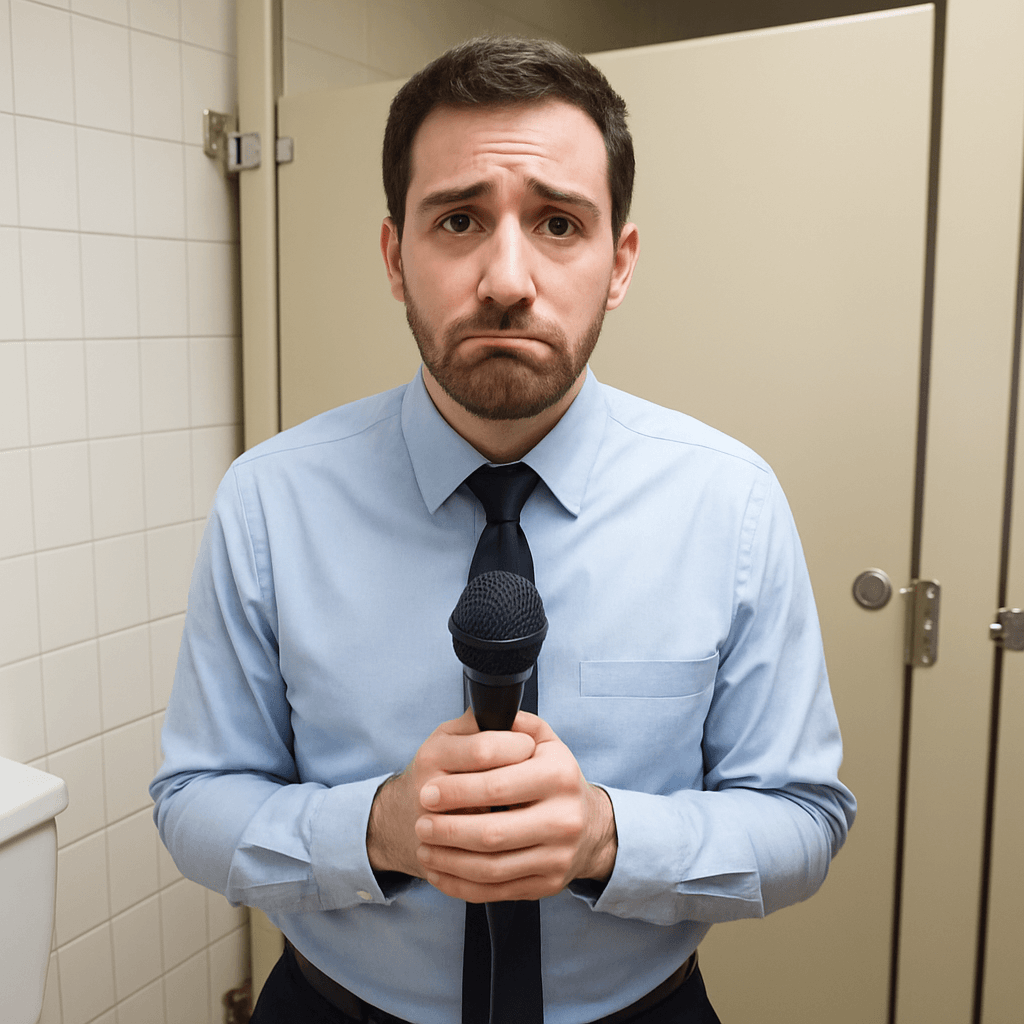
The Bathroom Pep Talk
Nothing says “confident professional” like whispering affirmations to yourself in a bathroom stall. Bonus points if someone walks in mid-pep-talk and you have to pretend you were just humming.
The Strategic Caffeine Calculation
Your relationship with caffeine before a speech requires careful planning:
| Caffeine Amount | What Really Happens To You |
|---|---|
| None | You might actually fall asleep during your own fascinating point about quarterly projections |
| One cup | The mythical “perfect alertness” zone that exists mainly in legend |
| Two cups | Mild hand gestures become Olympic-level choreography |
| Three cups | Words fly out so fast your audience gets neck strain trying to follow |
| Four+ cups | You can physically see sound waves and develop temporary telepathy |
The Outfit Test
Practice your presentation in your chosen outfit by:
- Raising your arms (does your shirt play peek-a-boo with your belly button?)
- Bending over (will the audience see more than they paid for?)
- Sitting down (do buttons become dangerous projectiles?)
Remember: comfortable clothes make for comfortable speakers. Uncomfortable clothes make for viral social media moments.
Effective Memory Recovery Techniques
What happens when your brain abandons ship mid-presentation? Don’t panic! Speech anxiety often peaks at this exact moment.
Emergency Recovery Tactics:
- Take a sip of water (the universal signal for “loading next thought”)
- Ask the audience a question (while silently begging your brain to come back online)
- Restate your last point differently (buying precious seconds)
- Check your notes (pretend you’re looking for a specific detail)
- Use a strategic pause (act like it’s intentional)
- Say “Now to expand on that concept…” (even if you’ve forgotten what the concept was)
One particularly effective technique is to pause dramatically as if you’re allowing the audience to absorb your wisdom.
This natural break gives you time to recollect while appearing intentional.
Visualization Techniques For Mental Preparation
How do you build presentation confidence before you even reach the podium? Mental preparation makes all the difference.
Power Visualization:
- Picture yourself delivering a flawless presentation (not the one where you’re in underwear)
- Imagine audience members nodding enthusiastically (not checking their phones)
- Visualize answering questions with ease and authority
Anxiety Reduction Method: Run through your entire presentation mentally before the actual event. Mentally rehearse your opening, key points, and conclusion to reduce speech anxiety.
Ready to take it up a notch? Try the “worst-case scenario” technique. Imagine everything going wrong, then realize even the worst outcome isn’t that bad. Your career will survive if you forget a slide or trip walking to the podium.
Creating Genuine Audience Connection
Want to know the difference between speakers who bomb and those who wow? It’s all about connection!
Making eye contact with audience members builds trust and engagement, but can feel uncomfortable for many speakers. Try these audience connection techniques:
- The Forehead Gaze: Look just above their eyes for a more comfortable connection that still appears engaged.
- The Triangle Method: Rotate your gaze between three points at the back of the room, creating the impression of audience scanning.
- The Friendly Face Technique: Find receptive audience members and return to them periodically as anchor points.
A tip from speaking coaches? Focus on connecting with individuals rather than the intimidating crowd as a whole.
This mental shift can reduce anxiety while strengthening audience connection.
Managing Physical Symptoms of Nervousness
Your body loves to betray you during presentations. Here’s how to fight back:
Shaky Hands? Hold a small object or use natural hand gestures that channel that energy productively. Remember: if you’re moving on purpose, it doesn’t count as shaking!
Excessive Perspiration? Dark clothing is your friend. Navy blue: the official color of “might be sweating, might not!”
Dry Mouth? Keep water nearby. Small sips work better than gulping, which just creates a new problem – the mid-presentation choking hazard.
Unsteady Legs? Plant your feet shoulder-width apart. Think superhero stance, minus the cape (unless that’s your presentation style).
Physical symptoms happen to everyone. Yes, even that speaker you admire who seems so polished.
Handling Q&A Sessions Effectively
Afraid of the unpredictable Q&A session? Who isn’t? But here’s how to handle it like a pro:
Common Question Types and How To Handle Them:
- The Never-Ending Comment: “That’s a fascinating perspective. Could you frame that as a question so I can better address your point?”
- The Technical Deep-Dive: “Great technical question! Here’s the key concept… Happy to discuss the specifics after the session.”
- The Inaudible Mumbler: “I want to give your question the attention it deserves. Could you repeat that a bit louder?”
- The Topic Hijacker: “That’s an interesting direction that goes beyond our focus today. Let’s chat right after we wrap up.”
The secret to Q&A mastery? Remember that you control the session, not the questioner.
Tech Tools For Presentation Success
What gadgets can boost your presentation confidence? These tech tools can help tame speech anxiety:
Presentation Remote:
- Frees you from keyboard prison
- Allows natural movement around the stage
- Includes timer function to prevent rambling
Slide Design Software: Easy-to-use templates that make even spreadsheet data look interesting. Because nothing says “please kill me now” like a slide with 200 numbers in 8-point font.
Confidence Monitor: See your slides without turning your back on the audience like a scared turtle.
Microphone Options:
- Handheld (pro: makes you feel like a rock star; con: occupies one hand)
- Lapel mic (pro: hands-free; con: will fall off at the most critical moment)
- Headset (pro: reliable; con: makes you look like you’re taking drive-thru orders)
Remember: technology should enhance your presentation, not become the presentation itself.
The Post-Speech Recovery Protocol
You did it! You survived! Now what?
- Accept compliments without listing all your mistakes
- Hydrate (your vocal cords will thank you)
- Jot down what went well
- Note one improvement for next time
Each speaking opportunity builds your presentation confidence.
The speaking skills you develop compound over time.
Speech Preparation Techniques
How you prepare makes all the difference between a home run and a strikeout. Ready to prep like a pro?
Content Development:
- Start with a hook that grabs attention faster than free food in an office
- Create a clear structure that even a sleep-deprived audience can follow
- Prepare stories that illustrate your points (humans remember stories, not data dumps)
- Build in pauses where people can actually process what you’ve said
Rehearsal Strategies:
- Practice in front of a mirror (yes, it feels weird, do it anyway)
- Record yourself with your phone (warning: nobody likes how they sound recorded)
- Time your presentation (then add 15% because you talk faster when nervous)
Want to know what separates beginners from experts? Experts practice until they can’t get it wrong. Beginners practice until they get it right once.
Conclusion: From Anxious to Accomplished
The truth about public speaking anxiety? Everyone experiences it.
The difference between good and great speakers isn’t the absence of nerves—it’s how they manage them.
Start small, use these techniques, and watch your confidence grow with each presentation.
Your audience wants you to succeed.
With these strategies, you will.
Next time someone asks if you’re nervous about your presentation, just say: “No, I’m not nervous. I’m prepared.”
Recent Posts
So you clicked this link. That tells us everything. Somewhere in that nicotine-soaked brain, there's a tiny survivor waving a white flag, begging for mercy. Maybe it's time to listen to that...
Nobody handed you a rulebook when you walked in. There's no orientation video. No pamphlet titled "So You've Decided to Stop Being a Disaster: A Beginner's Guide." You just showed up, grabbed some...