
Last Updated on April 25, 2025 by Michael
The Complete Guide to Space Tourism: What Every Aspiring Space Traveler Needs to Know
Welcome to the Final Frontier (Your Bank Account)
Earth is so last century. The cool kids are booking tickets to space these days, and you’re still deciding whether to splurge on that extra legroom for your flight to Cleveland. Space tourism is heating up faster than your ex’s Instagram feed after you broke up. Companies are launching regular folks (with irregular bank accounts) into the cosmos at record speed.
You think Hawaii is expensive? Try dropping $250,000 for three minutes of weightlessness where you can float around taking selfies that will make your high school reunion absolutely unbearable for everyone else.
Want to know what’s happening in the world of civilian space travel? Buckle up, buttercup. The future is here, and it doesn’t care about your motion sickness.
Current Space Tourism Options (Aka Ways to Blow Your Kid’s College Fund)
The space tourism market currently has several flavors of “holy cow, I’m in space!” experiences. Each one perfectly designed to either drain your savings or convince you that a second mortgage is a reasonable life choice.
Virgin Galactic offers the equivalent of dipping your toes in the water. Their spaceplane takes you juuuust high enough to technically call it “space” before bringing you back down. It’s like going to Paris but only seeing the airport gift shop.
Blue Origin takes a different approach with their “New Shepard” rocket. Named after Alan Shepard, the first American in space, but unlike Alan, you don’t need to be an accomplished test pilot. You just need to be accomplished at writing very large checks.
SpaceX is planning to send people around the moon. Around. The. Freaking. Moon. Remember when your parents were impressed you made it to Cincinnati without getting lost?
Shopping for your perfect space flight experience? It’s basically picking which expensive regret you prefer:
| Company | Experience | Price | What You Tell Friends | What It Actually Is |
|---|---|---|---|---|
| Virgin Galactic | 90-min flight, 3 mins of weightlessness | $450,000 | “I went to space!” | Technically the edge of space for less time than it takes to microwave a burrito |
| Blue Origin | 11-min rocket ride | $200,000-$300,000 | “I rode Bezos’ rocket!” | A very expensive roller coaster with better views |
| SpaceX | Orbit Earth for days | $55 million | “I was an astronaut!” | Trapped in a high-tech RV with strangers and nowhere to escape |
| Space Perspective | Balloon ride to stratosphere | $125,000 | “I saw the curve of Earth!” | Not actually space, but who’s checking? |
| Axiom Space | Stay on ISS for 8 days | $55 million | “I lived in space!” | Paying millions to be the awkward houseguest astronauts have to babysit |
Who Can Go to Space? (Spoiler: Not Just Billionaires Anymore)
Think you need to be a tech mogul or movie star to experience a microgravity trip? Not anymore! Space tourism companies are accepting commercial spaceflight participants from all walks of life—as long as those walks include strolls to your offshore bank account.
The basic requirements typically include:
- Being between 18-75 years old for most suborbital flights
- Passing a medical screening (with blood pressure below 140/90)
- Height requirements between 5’0″ and 6’4″ (sorry, basketball players)
- Having enough disposable income to make your financial advisor faint
Physical requirements vary by company. Virgin Galactic needs you to climb several flights of stairs without assistance. Blue Origin requires you to fasten your own seatbelt and climb a launch tower with 7 flights of stairs in under 90 seconds.
The selection process varies too. Some have straightforward waitlists where money talks and physics listens. Others run actual competitions or lotteries for seats. Virgin Galactic has over 600 people in line already, which means if you book today, you might fly sometime after flying cars become mainstream.
How to Book Your Space Trip (Hope You Like Waitlists)
Ready to reserve your seat among the stars? The booking process starts with choosing your preferred space flight experience provider and completing an online registration form. Most companies require a substantial initial deposit ranging from $10,000 to $150,000 just to get on their list. This money counts toward your final ticket, but don’t expect to fly anytime soon.
After your deposit, you join hundreds of others in a queue. Virgin Galactic’s earliest customers put down deposits in 2005 and some still haven’t flown. Priority typically goes to those who paid full price upfront or celebrities who provide free publicity.
As your flight date approaches (years later), you’ll undergo medical tests to ensure you won’t become a PR disaster by having a health emergency in space. If you pass the medical checks, you’ll be assigned a training date, typically 2-3 months before your flight.
What about refunds? Most companies offer 50-75% back if they cancel your flight, but if you back out, expect to lose 30-50% of your deposit depending on how close you are to launch day. The fine print often allows companies to keep your entire deposit if you fail the medical screening or training requirements.
Space trip insurance exists, with premiums running 5-15% of your total trip cost ($25,000+ for suborbital flights). These specialized policies cover medical emergencies in space, emergency evacuation, and trip cancellation due to medical reasons or launch failures. They specifically exclude “disappointment claims” when your space flight experience doesn’t match expectations.
When launches get delayed—and they always do—you’ll receive rescheduling notices with very little recourse. Weather, technical issues, and regulatory hurdles regularly push flights back by months. Companies typically offer branded merchandise or facility tours as consolation prizes while you wait.
How to Prepare for Your Space Adventure (Because Regular Vacations Are for Peasants)
Now that you’ve booked and paid, how do you prepare for your journey to the stars? Do normal people need special training? Absolutely! But don’t worry, it’s nothing compared to what actual astronauts go through. Think of it as the difference between climbing Mount Everest and the stair climber at Planet Fitness.
For suborbital flights, training is surprisingly brief—just 1-3 days of preparation. You’ll learn emergency procedures, how to move in your seat safely, and basic communication protocols. It’s like airline safety instructions, but with the added thrill that you might actually need to use them.
Your space tourism training will include:
- Learning how to not throw up during your microgravity trip (spoiler: most people fail this part)
- Finding out which buttons in the spacecraft you should NEVER touch
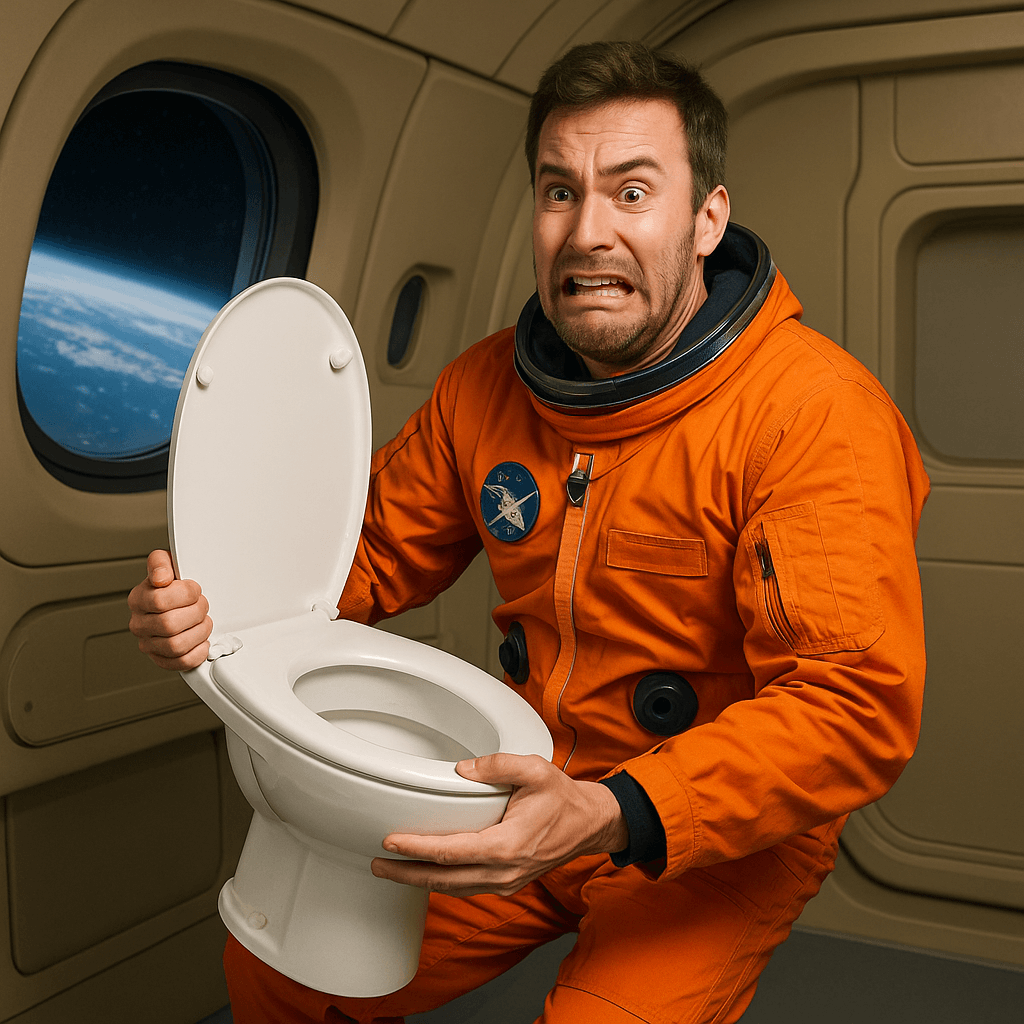
- Discovering how to use a toilet when everything floats
For longer orbital trips, companies like Axiom and SpaceX actually put you through modified astronaut training programs. You’ll spend 12-15 weeks learning emergency protocols, spacecraft systems, and how to eat without creating a floating food hazard. The training itself costs about $1 million—roughly the same as buying a luxury sports car to immediately drive off a cliff.
Preparing Mentally
Physical training gets all the attention, but the mental preparation for a space flight experience is equally important. Most providers now include psychological briefings to help you:
- Manage claustrophobia in the confined spacecraft cabin
- Cope with the “overview effect”—the profound emotional experience of seeing Earth from space
- Handle the disappointment when your Instagram followers care less about your space photos than you expected
Want the inside scoop? Here’s what actual commercial spaceflight participants didn’t expect:
- Space is BORING after the first 30 minutes
- You can’t actually see your house from up there
- WiFi is terrible, so those live Instagram stories? Not happening
- The “space food” tastes like something your dog would reject
- Coming back to Earth feels like being sat on by an elephant
- Your friends will stop inviting you to parties because you won’t stop talking about your celestial adventures
What to Pack for Space (Besides Your Platinum Card)
Packing for space requires strategic thinking. Your suitcase won’t fit in the rocket, and weight limits are strict.
Those designer clothes? Leave them at home. That fancy camera? Make sure it’s compact.
Motion sickness medication? Absolutely essential, despite what your ego suggests.
For the perfect space photos, bring a wide-angle lens camera with auto settings—you won’t have time to adjust manual settings while floating. Set your camera to high shutter speeds to compensate for spacecraft vibrations. And remember: Earth is the star of your photos, not you.
The weight restrictions for personal items are intense. Blue Origin allows exactly 3.3 pounds (1.5 kg) of personal items. Virgin Galactic permits 5 pounds (2.3 kg). On orbital flights, you might get 6.6 pounds (3 kg)—barely enough for a tablet, camera, and your lucky space underwear.
Most companies provide flight suits, hygiene kits, and basic necessities. Your job is simply to show up with a small personal item and a giant bank account.
Future Developments (Coming Soon to a Billionaire Near You)
Think today’s space tourism options are exciting? The future plans will make your head spin faster than zero-G training.
Lunar Getaways
Japanese billionaire Yusaku Maezawa has already booked SpaceX’s Starship for a trip around the moon with a planned launch date in 2025. The cost equals about 800 average American homes.
These lunar orbital trips will take approximately 6-7 days total. You’ll spend 3 days traveling to the moon, orbit it for about 24 hours, and then spend another 3 days returning to Earth. During the lunar orbit portion, you’ll see the far side of the moon (which no Apollo astronaut ever saw) and experience moments when both the moon and Earth are visible in the same frame.
Unlike the cramped confines of Apollo capsules, modern moon vessels promise “luxury accommodations” with private sleeping quarters the size of an airplane bathroom and windows large enough to frame your face for that perfect selfie.
Orbital Hotels
Orbital Assembly’s Voyager Station features artificial gravity, luxury suites, and a space-themed restaurant. Construction begins in 2026 with the first guests expected by 2030.
Blue Origin’s “Orbital Reef” promises business facilities and film production studios. They’re targeting 2027 for initial operations.
Axiom Space has the most realistic timeline. Their ISS module will attach to the space station by 2026, accepting wealthy tourists shortly afterward.
Entertainment in these orbital habitats includes zero-gravity sports arenas, VR stations with Earth exploration simulations, and “space walks” where guests can float outside while tethered to the station. The price of admission includes a spacesuit fitting session and bragging rights that will alienate all your friends.
Mars Expeditions
SpaceX is designing Mars transport systems, but don’t expect commercial trips until at least the 2030s. A Mars space flight experience would equal the cost of funding a small private university for a year.
The journey to Mars takes 7-9 months each way, plus a mandatory 18-month stay on the planet while you wait for Earth and Mars to align properly for return. That’s right—you’re signing up for a 3-year trip with people you barely know.
The spacecraft will need entertainment options to prevent passengers from going insane or murdering each other. Current plans include VR systems loaded with thousands of movies and games, hydroponics gardens where you can grow (and name) your own plants, and specialized windows that can digitally zoom in on stars and planets.
The nine-month journey means you’ll arrive with either the patience of a saint or the murderous intent of a horror movie villain toward your fellow travelers.
Health Effects of Space Travel (Or Why Your Doctor Will Judge You)
Space isn’t just tough on your wallet—it’s also tough on your body. Turns out humans evolved to live on Earth for a reason!
Physical changes during your microgravity trip:
- Bone density drops dramatically in space—you’ll lose in weeks what would normally take a year on Earth.
- Muscle strength drops rapidly without Earth’s gravity constantly making you work against it.
- Vision changes occur due to fluid shifts that put pressure on your eyeballs. Over 60% of astronauts experience vision problems during long-duration flights.
- Your face becomes puffy as fluids redistribute throughout your body without gravity pulling them down. Perfect for those space selfies, terrible for everyone who has to look at you.
All of these physical changes are manageable for short flights, but become increasingly problematic the longer you stay in space. Then comes the invisible danger—radiation.
Radiation exposure adds an extra spicy health risk. Suborbital flights expose you to radiation equivalent to about 20 chest X-rays. For orbital flights, the numbers jump dramatically. Commercial spaceflight participants on a two-week orbital trip might receive radiation equal to 3-4 CT scans or about what a radiation worker would be allowed to receive in a year. The space flight experience literally gives you a glow (just not the kind Instagram filters provide).
But who cares about long-term health effects when you can brag about going to space at every dinner party for the rest of your potentially shortened life?
Justifying the Cost and Environmental Impact
The carbon footprint of your celestial vacation is astronomical.
A single rocket launch produces 200-300 tons of carbon dioxide. That equals what 10 average Americans generate.
The environmental toll of space tourism includes:
- Massive carbon emissions from launches
- Space debris that will orbit Earth until the sun explodes
- Resource consumption that makes a Hummer look eco-friendly
Each Virgin Galactic flight generates 60 tons of CO2 per passenger—900 times what you’d produce on a flight from London to New York.
Rockets also emit black carbon directly into the upper atmosphere.
These particles absorb sunlight and heat the surrounding air.
This heating potentially affects weather patterns across the globe. Your 3-minute joyride might contribute to someone else’s extreme weather event.
Want to offset your space travel carbon footprint? Simply plant 7 million trees or convince everyone you know to never drive again. Or just accept that your ego is more important than the planet—after all, you’ll have photos of it from above to remember it by.
After learning about the massive carbon footprint and astronomical prices, you might wonder if this extravagant adventure makes any sense. Is floating weightless for a few minutes worth the environmental damage?
Conclusion: Should You Book Your Ticket?
Space tourism is growing faster than ever, with more commercial spaceflight participants touching the stars each year. Microgravity trips that once seemed impossible are now just improbable and wildly expensive.
Absolutely yes if:
- You have more money than you know what to do with
- You’ve already visited every country on Earth twice
- Your social media following needs a serious boost
Absolutely not if:
- You have any financial goals whatsoever
- You get motion sick on a merry-go-round
- You expect comfort, good food, or a bathroom door
The choice is entirely yours.
The stars await those brave enough to face the final frontier and empty enough to afford it. Just don’t be surprised when your social life suffers after you’ve mentioned space one too many times.
Recent Posts
A fake mustache smell is what happens when hubris meets synthetic hair and loses badly. Somewhere between "this will be hilarious" and "why does this face taste like a wet coin," every fake...
So you clicked this link. That tells us everything. Somewhere in that nicotine-soaked brain, there's a tiny survivor waving a white flag, begging for mercy. Maybe it's time to listen to that...