
Last Updated on November 9, 2024 by Michael
The Evolution of Couch Potatoes: Esports’ Chaotic Battle with Traditional Sports
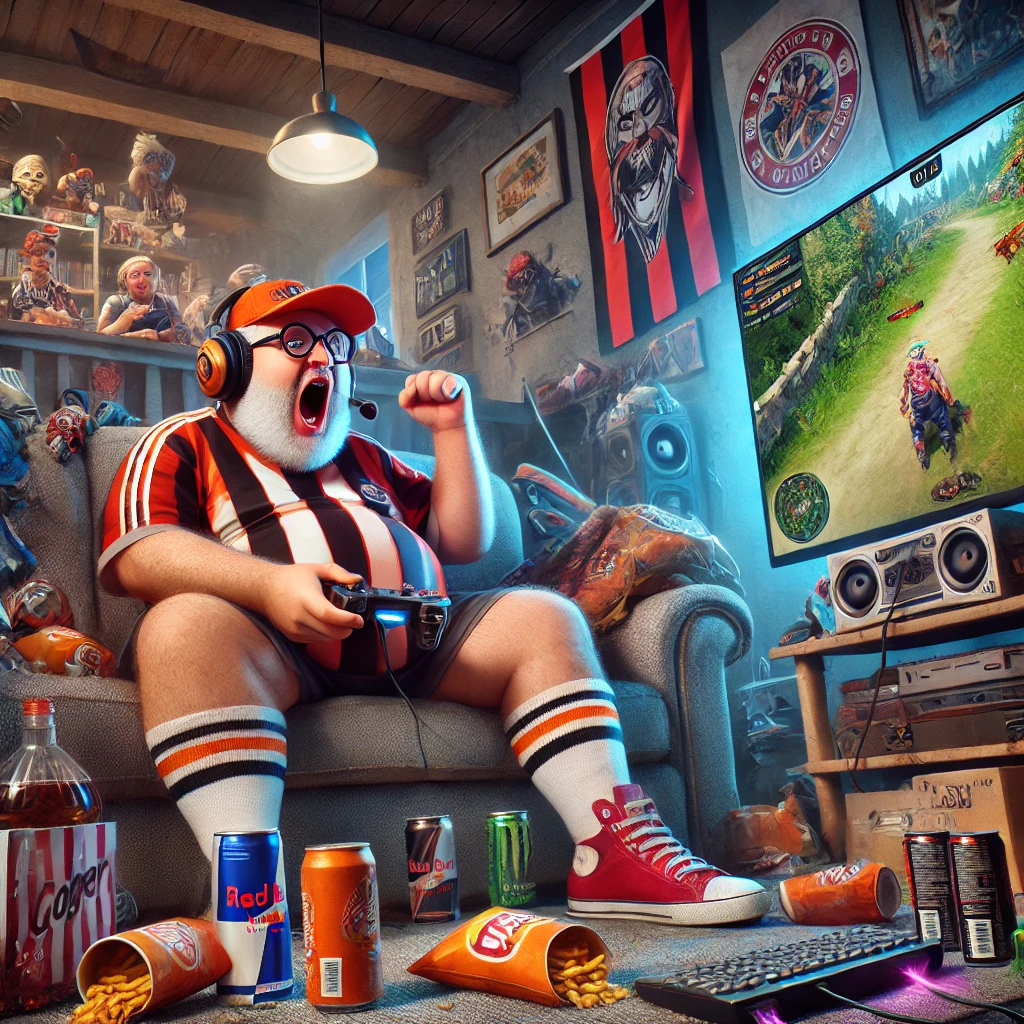
Ah, sports. A bastion of human excellence, sweat, and a socially acceptable excuse to wear spandex in public. But wait—enter Esports, that freakish newcomer causing everyone’s favorite quarterback to question whether throwing a ball is still, you know, cool. Grab your energy drinks, folks, because it’s time to stare at screens and figure out if competitive gaming has sucker-punched traditional sports into oblivion, or if it’s all just one big inside joke the universe is playing on humanity.
Banana Skins and Touchdowns: Are We Still Calling This Athletics?
Esports: the ultimate brain-child of adrenaline, caffeine, and zero sunlight. Here we are, gathered as a species, no longer content with just running after balls or watching people swim fast. Now, we thrive on 360-degree no-scopes and planting virtual bombs while sipping on half-priced frappuccinos. The evolution is… jarring. Are we still calling this athletics? Absolutely. But only if you’re willing to accept a frag grenade as a substitute for a discus throw.
There’s something poetic about watching a soccer mom, accustomed to weekend games of little Timmy kicking a ball around, suddenly cheering as that very same kid decimates someone named “xX_n0_scope69_Xx” with a sniper rifle. The traditional sideline oranges have now turned into cans of sugary sludge, and parental pride now involves maxing out killstreaks in “Call of Duty.”
Even the language of athletic prowess has gotten a reboot. “He shoots! He scores!” has morphed into, “He spams that spell! He deletes noobs!” Somewhere, an ancient Greek Olympian just rolled in his toga. Forget strength and endurance—this is about mental agility, internet latency, and not spilling your Cheetos all over the keyboard.
Traditional sports purists are understandably skeptical, as they’ve been used to people actually, you know, moving their bodies. But hey, pushing buttons counts too. After all, what’s a thumb wrestle if not an Olympic event for the modern gaming gladiator? Keep that thumb steady, and one day you might just find yourself hoisting an e-trophy—which, surprise, is also digital. Nothing’s real anymore, and that’s how we like it.
Meanwhile, athletes who once called themselves the gods of competition have begun looking at their Xbox-owning cousins with less disdain and more envy. Why risk a torn ACL when you can become the “League of Legends” world champion and avoid getting punched in the face? Seems like a good deal. Also, less laundry—no stinky socks to wash.
It’s a strange, awkward courtship between sweaty jocks and the pimply controller-slinging avatars. One plays on fields while the other plays on fiber optics. One can bench 200 pounds, and the other can stare at a screen for 12 hours straight. Who’s more impressive? Depends on what impresses you more: muscles or migraines.
The Sudden Popularity of Twitch Channels: Watch People Play, You Potato
There was a time when watching people play video games was the saddest possible activity you could partake in—right up there with waiting for paint to dry or contemplating the meaning of life while staring at an unplugged toaster. Now, suddenly, millions of people find it riveting. Welcome to Twitch—a platform where you watch people play games while you sit there, achieving the athletic equivalent of zero calories burned.
Think of it like this: humans love watching other people do things that they could easily do themselves but are too lazy to bother. I mean, why cook when you could watch a cooking show and order takeout instead? The same applies here. Instead of jumping into “Fortnite” and being obliterated by a 12-year-old with disturbingly good reflexes, you sit back and watch someone else get obliterated. It’s like watching a gladiatorial match, except less death, and a lot more shrill screams about Wi-Fi connection issues.
If you’re wondering why people love it so much, the answer’s simple: you get the thrill of victory and the agony of defeat without having to wear pants. Also, streamers are kind of like our modern-day philosophers. Only, instead of discussing Socratic wisdom, they’re yelling at teammates about why no one grabbed the healing potion. It’s deep, man. Really deep.
And let’s not forget the production quality. These Twitch channels are complete with overlays, alerts, sound effects, and enough flashing lights to induce a seizure—all for the sole purpose of enhancing the experience of someone playing a game you could easily download but won’t because you know you’ll suck at it. Then there’s the chat—a constantly flowing cascade of emojis, hype, and the occasional existential crisis. It’s a front-row ticket to absurdity.
Some argue that watching other people game is somehow sadder than playing video games alone, but let’s be honest here. Is it any weirder than spending four hours watching a ball being kicked around on a grassy field while some dudes in shorts try to put it in a net? At least in Esports, dragons can be involved. Name one football game where a dragon swoops down and obliterates the defense. I’ll wait.
Twitch has transformed these gamers into entertainers, celebrities, and for some—cult leaders. Seriously, some of these streamers have followings more loyal than a Labrador retriever on steroids. When a top streamer says “jump,” their viewers don’t just ask “how high”—they ask which video game cliff they should leap from while filming it for YouTube content.
The bizarre thing is that Esports viewership numbers are starting to rival, and even surpass, traditional sports broadcasts. Millions tune in to watch a group of guys sitting in fancy gaming chairs click on pixels. You’d think watching a football game would be more engaging, but then again, none of the football players shout “GG EZ” after scoring a touchdown. Maybe that’s where traditional sports are falling behind.
The Sponsors: From Jockstraps to Blue Light Glasses
Money talks, and it turns out money now wears blue light-blocking glasses and drinks protein shakes while also crushing entire bags of Doritos at 2 a.m. Sponsors who once focused on advertising cleats, jerseys, and sports drinks are now pouring their cash into this weird new category where athletes train with mouse pads instead of barbells. Nike? Yeah, meet HyperX. Gatorade? Say hello to G Fuel, now in flavors like “Code Red” and “Diabetes Surprise.”
But wait, why do sponsors care about a bunch of kids who spend their days clicking buttons and slouching in their chairs? The answer is obvious: the sheer scale of it all. Turns out, millions of people are willing to watch Esports—and, surprise surprise, they’ll buy things if you market those things as “enhancing performance.” Need to focus? Have some caffeinated gaming gummies. Feel tired? Slap on a cooling headband. Wrist pain? Special gamer braces—and while you’re at it, check out our new line of gaming socks. Apparently, socks can be optimized for a better KD ratio.
Sponsorship in Esports is not so much an industry as it is a gold rush. All you need is an endorsement from a popular gamer, and suddenly, you’ve got kids everywhere throwing money at ergonomic gaming chairs that look like they belong in a NASA spaceship. It’s both ridiculous and brilliant—sort of like convincing people to pay for water in bottles. Yet here we are.
And these sponsors, they’re savvy. They’re not content with boring patches on jerseys anymore—oh no. They’re invading every aspect of the experience, even down to the very language used by these gamers. If someone shouts, “Let’s go, brought to you by Mountain Dew!”, we just have to deal with it. The line between game and commercial is blurrier than a cheap 720p livestream.
Traditional athletes can no longer rest easy with their exclusive shoe deals. Now, it’s about who can get a branded gaming chair, a “collab” headset, or a line of energy drinks. Picture LeBron James slamming a can of G Fuel after hitting a three-pointer. It’s coming. Just you wait. The Esports revolution has sponsors realizing there’s a whole world of couch-bound viewers that they’ve barely scratched the surface of.
This explosion in sponsorship is further proof of what everyone secretly knows—capitalism is the ultimate game, and everyone is getting played. Traditional athletes endorse sneakers; gamers endorse RGB keyboards that light up in 16 million different ways. And both demographics fork over hard-earned cash for the privilege of having that endorsement sticker slapped on their forehead.
Kids Are Choosing Esports Careers, and Parents Are Losing It
Remember when kids used to dream of being astronauts, firefighters, or rock stars? Fast forward to 2024, and here we are—kids now want to be professional Esports players. Or, in layman’s terms, “I want to sit in a room and click buttons for a living.” Parents everywhere are panicking, scrambling to understand why little Johnny doesn’t want to kick a soccer ball anymore and instead dreams of representing a major gaming organization while wearing gamer-branded underwear.
Of course, parents try to pull out the classics: “When I was your age, we played outside!” Well, when they were kids, there also weren’t billion-dollar Esports franchises or tournaments that could bankroll a mortgage in a single weekend. Sorry, mom and dad—Johnny can get a full-ride scholarship by gaming now. Good luck trying to explain how “playing outside” will compete with a six-figure salary and legions of adoring fans.
The truth is that Esports as a career path is legitimately lucrative. It’s just that it also comes with a certain stigma. Who would have thought “professional gamer” would be a viable career option one day, with health benefits and a retirement plan—and yet, here we are. Traditional sports parents have been forced to accept that kids today don’t want to dribble balls, they want to optimize their key bindings.
And the horror doesn’t stop there. Traditional sports demand practice and physical conditioning. “You can’t skip leg day!” they said. But in Esports, leg day means getting up to find a new bag of Doritos. In fact, professional Esports players have trainers too—but instead of focusing on endurance, they’re working on posture, wrist strength, and making sure the gamers don’t get too addicted to Red Bull. Different skills, same vibes.
Esports requires an absolutely bizarre set of skills: quick reflexes, strategy, and the ability to not lose your mind when some 11-year-old obliterates your ranked points. Parents look at all this and shudder. They try to convince their kids that it’s not “real.” But let’s face it—those checks are real. The money, the fame, the online simps—all very, very real.
Career days at school have changed forever. A kid once proudly stating, “I want to be a firefighter,” has been outdone by “I’m going to be an Apex Legends champion and main Wraith.” Teachers are at a loss. The astronauts have been benched. Now it’s all about the ones and zeroes, and how fast you can click on them. Traditional dreams are being replaced with digital ones, and there’s nothing we can do but sit back, spectate, and maybe get really, really good at “Overwatch 2.”
Stadiums for Gamers: Less Sweat, More Lasers
Sports stadiums—a historical site for drunk fans, spilled beer, and overpriced hotdogs. But forget the usual suspects like Fenway or Wrigley Field. Enter Esports stadiums—where, instead of watching athletes sprinting across a field, we watch people sitting in ergonomic chairs, intensely focused on their screens while the audience cheers for the pixelated carnage. It’s like watching chess, if chess involved headshots, magic spells, and an outrageous amount of RGB lighting.
These arenas are popping up everywhere, outfitted with massive screens, mind-bending light shows, and enough pyrotechnics to set off a small earthquake. If a traditional sports game includes a decent halftime show, an Esports event includes a death-defying rave that’s part gaming, part techno wizardry, and entirely over-the-top. Picture a concert, a tech convention, and a competitive gaming marathon all in one—except half the audience is also playing on their phones at the same time.
And then there’s the fact that Esports fans take it deadly seriously. You might think football fans are hardcore, but these guys put their hearts, souls, and entire tax returns into their fandom. When a favorite team wins, it’s fireworks and celebrations. When they lose, it’s like a personal tragedy—they’ll be in chat threatening to uninstall “League of Legends” for the 25th time. Traditional sports crowds have nothing on a salty gamer who just lost his ranked status because his favorite mid-laner whiffed a gank.
The whole stadium culture has shifted from getting sunburned in bleachers to sitting in air-conditioned comfort while trying not to spill your Slurpee. There are no cheerleaders, but there are mascots—mascots with digital avatars, because of course there are. Who needs a dude in a bear suit when you could have an anime character rendered in 4K leading the hype?
Even the chants have changed. Forget “Defense! Defense!”; now it’s “Nerf this champ!” and “GG EZ.” It’s all kinds of bizarre, and yet, it works. Esports arenas are filling up with an energy that’s part nostalgia for traditional competition and part complete insanity—an audience excited by watching people push buttons with precision. You could laugh, or you could join in, because let’s be real, everyone loves a good laser show.
The pandemic pushed things even further, with events going online, and stadiums virtually filling up with avatars from around the world. Instead of shouting in a physical crowd, people could spam emojis, and instead of the wave, there were memes. And honestly? It worked. The audience still showed up. The events still broke records. It turns out, watching gaming from the comfort of your couch while wearing pajama pants is somehow just as exciting as being in the nosebleed section of a stadium. Go figure.
There’s an absurdity in all of this, and maybe that’s the point. A bunch of folks sitting around, focused on a screen, while thousands of people cheer. Isn’t that what traditional sports always were anyway? Only this time, instead of cleats, it’s RGB keyboards. Instead of team buses, it’s Discord servers. The heart of it—the competitiveness, the passion, the human drama—is still there. We just replaced the grass with pixels, and honestly, it’s kind of amazing.
Conclusion? Nah, Just an End Credit Sequence
So, here we are—the grand collision of sweat-soaked athletes and wrist-braced gamers. The rise of Esports isn’t just a shift; it’s a cosmic joke on tradition, flipping the concept of sports upside down while making sure no one leaves their gaming chair. Whether you think it’s the next evolution of human competition or a strange fad that makes you long for simpler times, it’s undeniable that Esports is here, doing donuts on the front lawn of tradition.
Traditional sports and Esports may be fundamentally different, but they share one thing: the thrill of competition. They might just be two sides of the same ridiculous, caffeine-fueled coin. Grab your popcorn, crack open an energy drink, and get ready—because whatever happens next, it’s sure to be weird as hell.
Recent Posts
So you clicked this link. That tells us everything. Somewhere in that nicotine-soaked brain, there's a tiny survivor waving a white flag, begging for mercy. Maybe it's time to listen to that...
Nobody handed you a rulebook when you walked in. There's no orientation video. No pamphlet titled "So You've Decided to Stop Being a Disaster: A Beginner's Guide." You just showed up, grabbed some...