
Last Updated on November 10, 2024 by Michael
Growing Your Own Jungle: A Completely Sane Guide to Backyard Gardening
Dirt, Sun, and the Raw Desire to Dominate Nature
Gardening: it’s the one socially acceptable excuse for getting elbow-deep in dirt without anyone questioning your sanity. When you tell someone you’re starting a backyard garden, they’ll usually smile and nod, but deep inside, they know you’re about to declare war against nature’s little surprises—like weeds, bugs, and that one stray squirrel who just won’t let you live in peace. Let’s jump straight into cultivating your very own mini-jungle, where you’re the king or queen—unless, of course, the insects have a better battle strategy.
Talking to Plants is Optional (But Being Weird Is Mandatory)
Right, let’s get something straight—you don’t need to talk to your plants. But, if you want to assert your dominance, grab a coffee, sit with your cabbage patch, and tell them about your day. Plants love gossip. They’ll flourish just to hear you rant about how Karen in accounting stole your stapler again. Also, nothing quite says “I’ve got my life together” like chatting up a row of zucchinis at 7 AM in your bathrobe. It’s practically the pinnacle of adulthood.
If you’re feeling super ambitious, start naming them. Not cute, trendy names like ‘Sprouty’ or ‘Leafy.’ No, no—give them names like Greg, Matilda, and Lucifer. Plants like it when you give them the feeling that they’re more important than your houseplants. And don’t just talk, interrogate them. If your marigolds start slacking off, it’s time for a disciplinary meeting. Who knows? A bit of good cop/bad cop might be the trick to producing world-class blooms.
You may also want to practice making them feel threatened—you know, just for motivation. Hold a salad bowl in one hand, and look them dead in the leaves. They’ll get the message: grow, or they’re on the next express ticket to vinaigrette town.
The Secret to Soil Health? Think Like a Mole and Be as Chaotic as Possible
If you think soil is just a pile of brown crumbs that bugs use as a subway, congratulations, you’re correct—but it’s also SO much more than that. Soil is a battleground for nutrients, bugs, and whatever snacks your neighbor’s cat buried in there. So, how do you make your soil better? Easy—chaos. Toss in some crushed eggshells, a bit of coffee grounds, a couple of shredded conspiracy theory leaflets, and for good measure, a secret ingredient you tell no one about. The mystery makes it thrive—just trust me.
Got a compost heap? If not, make one. Nothing screams ‘serious gardener’ like creating a pile of literal trash and waiting six months for it to become magic dirt juice. Composting is about breaking down food scraps and making all your neighbors wonder why your yard smells like a failed chemistry experiment. Get creative with your pile: add your ex’s mixtape, that piece of fruitcake you never wanted, or expired dreams from 2017. Whatever it takes to make those microbes thrive.
And please, for the love of all things green, get a shovel. You’ll need it to bury your sense of dignity when you realize you’ve been shoveling and raking the same spot for three hours. You’ll be shocked at how much you’ll bond with a shovel once you’ve lovingly scraped half of your yard into submission.
Watering Your Garden: Find That Fine Line Between Love and a Flood
Watering your garden is easy, right? Sure, if you like playing ‘will my plants drown today or die of dehydration tomorrow?’ Nothing says backyard gardening like poorly calculated sprinkler theatrics. One day it’s a dry desert, and the next, it’s the next set for an Atlantis documentary. To keep things exciting, water your garden using various unconventional methods. Consider using a Super Soaker for a more tactical, battlefield approach. It’s all about asserting dominance.
Oh, and don’t forget the classic garden hose tango—an age-old ritual where you accidentally spray yourself in the face every third time you turn it on. It’s basically a rite of passage. Sometimes you might even want to let it spray wildly just to keep your garden guessing. Does this water belong to the tomatoes or my left shoe? Only time will tell.
In case you’re feeling extra generous, sing to your plants while watering them. Forget all those classic melodies—plants prefer niche genres. Belt out death metal, Gregorian chants, or that one annoying TikTok song you can’t get out of your head. Trust me, they love it—or at the very least, they’ll grow just to escape your awful falsetto.
Also, don’t let your neighbors catch you in the act. Nothing quite explains the sight of a grown adult watering plants while chanting in broken Latin. It’s only cute until they start calling the homeowners association.
Weed Warfare: The Never-Ending Fight Against Nature’s Freeloaders
Weeds—they’re like that distant relative who comes for a weekend visit and then never leaves. You’ll pull one weed, and five will pop up like they’re part of some sinister MLM scheme. The secret to defeating them? Vengeance and a healthy level of spite. Weeding is less about gardening and more about letting out your inner rage—one dandelion at a time.
Pull them with your hands, torch them with a flamethrower (just kidding—unless you’re into exciting insurance claims), or train your dog to hate them just as much as you do. Become the vigilante your backyard deserves. When in doubt, throw a tarp over them. It’s the “I’ll deal with this later” approach, except the tarp doubles as a form of plant suffocation. It’s dramatic, effective, and petty—which is honestly what most gardening should be.
For a more hands-off approach, consider psychological warfare. Set up tiny scarecrows that laugh in the face of intruders. Glue googly eyes to rocks and put them in suspicious locations. Play opera music at 3 AM—weeds hate high society. The trick is to convince those freeloading green nuisances that it’s not worth setting roots anywhere near your backyard.
Finally, make peace with the fact that you will lose a few battles. Weeds are stubborn, relentless, and they have nothing to lose—unlike you, who has already lost dignity, sanity, and feeling in both knees while dealing with them. But that’s okay. It’s all part of the game, my friend.
The Bug Invasion: Negotiating with the Backyard Mafia
Bugs—the original mob bosses of the garden world. You’ve got the aphids running rackets on your roses, snails acting like gluttonous middlemen, and ladybugs who think they’re the cops keeping everything in check. But, like any wise negotiator, you must strike deals. Sure, a few bugs are okay—a little bit of gang presence keeps the peace. But too many? Well, you’ve got a problem.
Ladybugs are the hitmen you want on your side. They eat the bad guys and don’t ask for much in return—just the occasional selfie for your Instagram. If you see one, treat it with respect. They’re the silent warriors that will save your cabbages from death by caterpillar.
But then you have slugs—the shameless, mucus-leaving garden squatters. These creatures operate with the grace of a drunk uncle at a wedding. They’ll slide into your garden like they own the place, leaving behind a slime trail just to rub it in. Fight fire with fire—or in this case, fight slime with beer. Yes, beer. Fill a shallow dish, set it in the garden, and watch as slugs fall victim to their love of booze. It’s not pretty, but neither is the idea of sharing your lettuce.
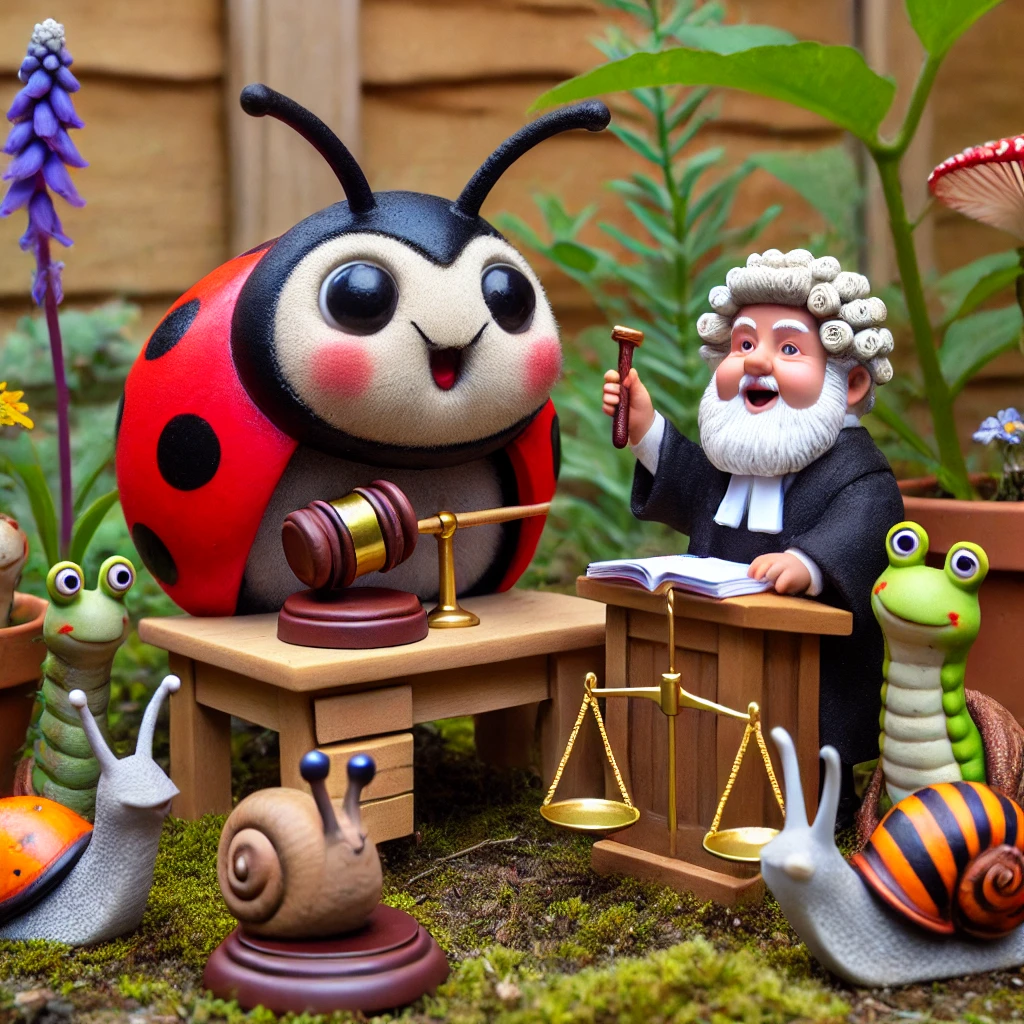
For those with extra time and a penchant for madness, consider holding mock trials for your insect “criminals.” Set up a tiny courtroom in your garden. Make little judge wigs out of cotton balls, use popsicle sticks as gavels, and decide which bugs deserve execution and which deserve exile. Sure, your neighbors might consider institutionalizing you, but hey, your carrots will thrive.
And don’t even get me started on ants. They’re like that super-organized cult that just won’t leave. You kill a few, and the others come back stronger—with a vengeance. Set boundaries. Threaten them with cinnamon. Ants hate spicy boundaries, and who can blame them?
Harvest Time: You’ve Grown a Salad, Now What?
Finally—after months of sweat, questionable fashion choices (gardening overalls, anyone?), and a couple of public arguments with a rose bush—it’s time to harvest. This is where you finally reap the fruits of your labor, except it’s not just fruits—it’s also a whole lot of regret about not planting more practical things. Did you really need ten zucchini plants? Spoiler: No one does.
Harvesting should be done with an air of superiority, as though you’re the ruler of some small vegetable empire. Carry a basket around, swing it dramatically, and look disappointed at every carrot you pull—as if it owes you something more. After all, if you’re going to be standing in your backyard pulling edible roots out of the ground, you might as well look dramatic doing it.
While you’re at it, consider declaring harvest ceremonies. Invite your friends, neighbors, and that one guy who’s always mysteriously mowing his lawn at 3 AM. Make it weird—wear robes, chant, maybe even crown the biggest beetroot as “King Root of the Harvest.” At this point, you’ve probably already crossed over from casual gardener to “the eccentric neighbor we don’t talk to anymore,” so embrace it.
Don’t forget the Instagram photos. What’s the point of growing your own kale if you can’t rub it in everyone else’s face? Snap those photos, post them online, and caption them with something absurd like, “Just harvested enough kale to feed a small angry goat. Who wants some?”
The final step is always the feast. Eat everything you’ve grown, even if you hate it. There is no backing out now. You’ve birthed these vegetables—it’s your duty to devour them. Grill that zucchini, make that pesto, and cry softly into your salad, knowing that you’ve finally done it—you’ve grown your own food, and it only took a year of borderline insanity and a couple of fights with insects.
Chicken Wire and Bubble Wrap: Gardening Security Systems Gone Overboard
If you think protecting your garden is as simple as setting up a scarecrow, you’re not dreaming big enough. A proper backyard garden deserves an absurd level of over-the-top security that rivals Fort Knox—because, after all, we’re talking about vegetables here, and we can’t have the neighborhood wildlife thinking they have open season on your crops.
Chicken wire is just the beginning. We’re talking about building fortresses complete with barbed wire, alarms, and maybe even a moat. Forget practicality. Who needs it when you have bubble wrap? Bubble wrap every single plant as a protective measure against the elements, stray balls, and that one dog who believes your yard is his personal potty. Bonus points if you can rig up a laser pointer security system that makes your garden look like it’s hiding national secrets.
And don’t stop there. Consider hiring a fake security guard. A mannequin in a reflective vest standing at the corner of your garden might be the edge you need to keep those rabbits second-guessing. As long as they don’t call your bluff and realize the mannequin doesn’t move, you’ve got this garden security thing on lockdown.
For even more fun, set up security cameras—fake or real, your choice. The idea isn’t just to scare off animals; it’s to make everyone wonder if you’ve taken gardening way too seriously. Imagine the raccoons sweating it out under the glaring gaze of a plastic camera.
Set your security announcements on an automatic timer. You know, the “Warning, you have entered a restricted gardening area” sort of vibe. Not that the squirrels will understand it—but it’s the thought that counts. You may as well embrace the idea that you’re not just growing plants; you’re running an elite compound.
And let’s not forget booby traps. The harmless kind, of course. Attach bells to the ends of tripwires so when anything enters, you know instantly. Or, set up a glitter bomb that rains biodegradable sparkles every time a tomato thief crosses the line. That thief could be a raccoon, or it could be your cousin Steve—either way, justice will be served.
The Battle of the Mulch: A Story of Compromise and Poor Decisions
Mulch—a concept that divides the gardening community. Choosing your mulch is akin to choosing sides in a civil war. Are you on Team Bark, Team Straw, or Team That-Weird-Red-Mulch-That-Looks-Like-Crayons? It’s a choice that will haunt you, mainly because once you choose, you’ll be stuck with it for a while.
If you pick bark mulch, prepare to find it in places you never imagined mulch could reach. Socks, cars, your bed—bark mulch has no concept of boundaries. Straw mulch is a different flavor of chaos; it’s messy, perfect for making your yard look like a petting zoo. And that red mulch? Congratulations, you now have a garden that looks like it belongs in a playground for demonic children.
But what about the practicality of mulch? Forget that—it’s all about aesthetics and trying to convince yourself and your neighbors that you definitely know what you’re doing. Spread it out haphazardly, then spend the next week rearranging it until it looks “natural” enough to prove you have gardening instincts.
Every time you spread mulch, it’s an adventure. You’ll find bugs you’ve never seen before, mysterious rocks that look like they belong in a museum, and an endless number of reasons to regret gardening altogether. But you’re in too deep now, and the mulch must flow.
For added flair, host a mulch-themed party. Invite friends over, have them bring their favorite mulching tools, and make an event out of the chaos. Nothing says “great weekend” like a group of grown adults collectively questioning their life choices as they spread organic debris across a backyard.
If you feel your mulch is too boring, add decorations. Little garden gnomes buried halfway to their heads, random figurines that only you understand the significance of, or even some glow-in-the-dark paint for nighttime gardening ambiance. Make it look like a whimsical battlefield, where no one quite knows what’s going on—including you.
Garden Fashion: Dressing for Success or Ridicule, You Decide
Gardening outfits are not just about function; they are about making a statement. That statement might be “I’ve completely given up on fashion” or “I’m one bad sunhat away from starring in my own reality show.” Either way, dressing for the garden is an art.
Start with the hat. The bigger, the better. You want something that makes people wonder if you’re a gardener or if you’re here to shade an entire picnic. Sun protection is crucial, but let’s be real—it’s all about the drama. Pair it with oversized sunglasses that make you look like a celebrity incognito and, just like that, you’ve made watering the tomatoes look like a Hollywood event.
Footwear is equally important. Ideally, you want shoes that can survive an apocalypse, or at least shoes that have seen so much garden action that they now exist in a permanent state of mud-crust chic. Crocs? Yes, but add socks to make a truly terrible fashion statement. Bonus points if they’re knee-high socks with random vegetable prints.
Your gardening gloves should scream impractical. Go for lace, velvet, or something equally absurd, just for the sheer joy of it. They won’t protect your hands, but they will give you the satisfaction of looking completely ridiculous while handling thorny rose bushes. Practicality is overrated.
Overalls—because no garden fashion ensemble is complete without a pair of oversized, shapeless overalls. They should be so baggy that you could conceivably use the pockets to store small animals, should the need arise. And make sure they’re covered in patches—bonus points if the patches have motivational gardening quotes like “Bloom where you’re planted” or “Live, Laugh, Leaf.”
Consider accessorizing with random bits of the garden itself. Stick a flower behind your ear, add a sprig of rosemary to your hat, or just casually carry around a trowel like it’s a designer handbag. Nothing says dedication like turning yourself into part of the foliage.
For ultimate garden fashion points, create an alter ego. Name yourself “The Green Baron” or “Compost Queen.” Speak in third person. Make gardening a character act that leaves everyone uncertain if you’re just eccentric or if you’ve entirely lost your grip on reality. Spoiler: it’s probably both.
The Neighbor Factor: Building Alliances or Creating Enemies
Your neighbors play a pivotal role in your gardening journey. They will either be your allies, offering seeds and advice, or they will become sworn enemies, glaring over the fence as your cucumber vines “accidentally” encroach on their property. Either way, neighbors make gardening more fun.
If you want to win your neighbors over, share your harvest. But not the good harvest—give them the slightly wonky cucumbers and that one misshapen carrot that looks like it’s doing yoga. It’s the thought that counts, and nothing says neighborly love like passive-aggressively gifting imperfect produce.
Alternatively, start a garden rivalry. Grow the tallest sunflowers, the juiciest tomatoes, or the weirdest gourds. Let it escalate until you’re both presenting your vegetables to passersby like it’s some kind of horticultural arms race. No words are necessary—just subtle nods of acknowledgement and a hint of competitiveness in your eyes.
There’s also the option of going full stealth mode. Garden at night, in secret, like some sort of vegetable vigilante. Leave mysterious notes for your neighbors—something cryptic like, “The zucchinis are watching.” Keep them guessing. Are you a friend or a foe? Do you even really exist? The more they wonder, the better.
If you’re lucky enough to have a nosy neighbor, use them to your advantage. Leave random garden tools around, or inexplicably place a single chair in the middle of your yard. Make it weird. Let them think you’re doing something secretive—because nothing keeps neighborhood gossip alive like inexplicable garden behavior.
And if you truly want to foster alliances, invite your neighbors to join your garden cult. Give it a name—”The Order of the Green Thumb” sounds appropriately ominous—and invite them to wear matching gardening robes. The catch? There is no actual cult, just occasional group gardening where everyone stands around awkwardly trying to interpret the point of it all.
If your neighbor’s cat likes to visit your garden, embrace it. Declare it the garden mascot. Make a tiny throne for it out of old flower pots. Crown it with a daisy chain and refer to it as “Lord Whiskers.” Cats love attention, and your neighbors will love the fact that you’re just a touch stranger than they initially imagined.
Garden Art Installations: When Your Backyard Becomes a Modern Exhibit
Garden art—where the line between horticulture and avant-garde nonsense blurs beautifully. You can’t just plant flowers and call it a day. No, a true gardener turns their backyard into an exhibit of personal madness for all to witness.
Start with gnomes. Lots of gnomes. But instead of positioning them neatly, create scenes. Make them look like they’re conspiring against a squirrel. Or create a gnome crime scene—chalk outlines, tiny gnome-sized police tape, the works. Gnomes are underrated actors, and your backyard is their stage.
Add unexpected items that don’t belong. Put an old recliner in the middle of your garden, throw a plant on it, and call it “The Reclining Flora.” Get an old mirror and lean it against the fence—it’ll confuse birds, scare cats, and provide endless amusement as it becomes an accidental art exhibit titled “Nature Reflects.”
Fairy lights? Sure, but don’t stop there. Hang an absurd number of lights so that your garden is visible from space. Let your backyard glow like a misguided Christmas display. It adds a touch of mystery, plus it helps you keep an eye on any critters trying to sneak in at night.
Build a tiny garden village out of random scraps. Cardboard boxes, leftover tiles, bits of old toys—it doesn’t matter. Make tiny houses, build roads, and declare yourself mayor of “Gardenia City.” Hold elections for mayor, even if you’re the only candidate. Nobody else will run, but your sense of democracy will keep things interesting.
If you have old tools that no longer work, don’t throw them away. Stick them in the ground like some kind of post-apocalyptic tribute to farming. Give each broken tool a name and make a plaque—”Here lies Rusty, the Rake of Regret.” It’s all about embracing the chaos and honoring your failures in style.
Buy plastic flamingos, but make them creepy. Paint them weird colors, give them ominous googly eyes, or pose them so they’re always watching the garden gate. Flamingos are already unsettling, so lean into it. Use that energy to give your backyard an edge that’ll make everyone question your taste in decor.
For those particularly attached to the garden, add a throne. Build it out of recycled wood, set it in a prominent position, and declare it the “Throne of Roots.” Sit on it dramatically during your harvest ceremonies, wear a cape, and laugh maniacally. The trick is to let everyone know that gardening isn’t just a hobby—it’s a theatrical experience.
Night Gardening: Why Sleep When You Can Argue with Nocturnal Pests?
Who needs sleep when you have a garden that demands 24-hour attention? Night gardening is an underrated activity, perfect for insomniacs, those avoiding responsibility, and anyone with a thirst for danger.
Start by investing in headlamps. The kind that spelunkers use. Strap it on, flick it to the highest setting, and prepare to blind every moth and bat that dares cross your path. Night gardening isn’t for the faint of heart—it’s about showing the nocturnal world that you won’t rest until every weed is pulled.
Think of it as an opportunity to connect with the mysterious night critters. You’ll meet slugs, snails, and that one raccoon that’s convinced your compost heap is a Michelin-star buffet. Greet them. Talk to them. Give them ridiculous nicknames like “Sir Slimebottom” and “Count Trashula.” Befriending your foes is part of the fun.
Night gardening attire? Anything goes. Wear your pajamas for the ultimate “I don’t care” vibe, or go all out with dark robes and a lantern, evoking some sort of haunted gardener aesthetic. Neighbors might catch glimpses of you, but by now, they’ve already accepted your nighttime peculiarities.
Use glow-in-the-dark plant markers. Not because you need to know where your plants are—by now you should know every leaf and root by name—but because it makes the garden look eerily enchanting. A touch of whimsy mixed with the eerie glow of fluorescents is a combination that keeps both pests and people on their toes.
Try to garden silently. No shoveling, no talking, just slow, deliberate movements that make it look like you’re performing some strange nocturnal ritual. If a neighbor catches you, slowly turn your headlamp toward them, nod once, and get back to work. They’ll never question your dedication again.
Host night garden tours. Invite friends over and give them the grand tour of your nighttime masterpiece. Charge them admission if they want to see the glow-in-the-dark beans or witness the moment a moth realizes you’ve taken gardening too far. Bonus points if you serve tea in the middle of the garden under the moonlight.
For pest control, try strange nocturnal deterrents—hanging CDs that reflect moonlight, wind chimes that sound like ghosts, or simply yelling “get out of my lettuce” into the darkness every few minutes. You might not get rid of pests, but you’ll definitely keep things interesting.
And if the raccoons or possums get a bit too brave, challenge them. One-on-one staring contests are known to be effective. They may steal your carrots, but they can never steal your pride.
The Great Tomato Conspiracy: Are They Really Worth the Trouble?
Tomatoes, the divas of the vegetable patch. They need sun, they need love, they need precisely balanced watering, and sometimes they just seem to need drama. Honestly, are they worth the trouble? Let’s discuss.
Growing tomatoes is like raising emotionally unstable children. One day, they’re thriving. The next, they’ve dropped half their blossoms, and you’re left feeling like a failed tomato parent. You water them, they drown. You let them dry, they sulk. It’s an endless game of “what do you even want from me?!”
Then there’s the staking. Tomatoes can’t stand on their own, because of course they can’t. Get ready to spend hours gently tying each plant to a stick, only for it to rebel and collapse anyway. If gardening is a battle, then staking tomatoes is trench warfare.
Blight—a word that sends shivers down the spine of even the most seasoned gardener. It’s like a curse that hovers over your tomato patch. You can be the most attentive gardener in the world, and one day you’ll walk out to find your beautiful tomatoes spotted and sad, like they’ve caught a vegetable flu.
Pruning is another saga entirely. You must make sure the plants don’t have too much foliage, but also not too little. It’s a delicate balance that’s almost impossible to get right. Are you snipping away too much? Are you killing your beloved tomatoes with your incompetence? Who knows? The tomatoes certainly won’t tell you.
And then there’s the harvest. If you’ve survived the chaos and actually gotten the tomatoes to ripen, congratulations—you have exactly three ripe tomatoes and a thousand that will ripen exactly one week after the season ends. Tomatoes live to mock you.
For every gardener that swears by tomatoes, there’s one questioning their life choices while dealing with their finicky whims. Why do we put up with it? Because, just maybe, there’s something about finally biting into that first ripe tomato that makes it almost—almost—worth all the suffering.
For those particularly fed up, consider starting conspiracy theories about your tomatoes. Tell your neighbors that tomatoes are plotting against you. Paint tiny mustaches on each one. Give them names like “Benedict” and “Judas.” Tell anyone who’ll listen that the tomatoes are planning a garden coup.
Keep a tomato diary. Document every moment of hardship. Every failed blossom, every overwatering incident, every bug that dares come near. Rant at length. Use strong language. The catharsis of venting about your tomatoes’ betrayal might make the entire ordeal bearable.
When you finally harvest, throw a “Tomato Truce” ceremony. Forgive them for their temperamental nature, and move forward. Eat them ceremonially, and pretend the months of drama never happened. But never forget—they might be delicious, but tomatoes will always be the ultimate divas of the garden.
Recent Posts
So you clicked this link. That tells us everything. Somewhere in that nicotine-soaked brain, there's a tiny survivor waving a white flag, begging for mercy. Maybe it's time to listen to that...
Nobody handed you a rulebook when you walked in. There's no orientation video. No pamphlet titled "So You've Decided to Stop Being a Disaster: A Beginner's Guide." You just showed up, grabbed some...