
Last Updated on May 19, 2024 by Michael
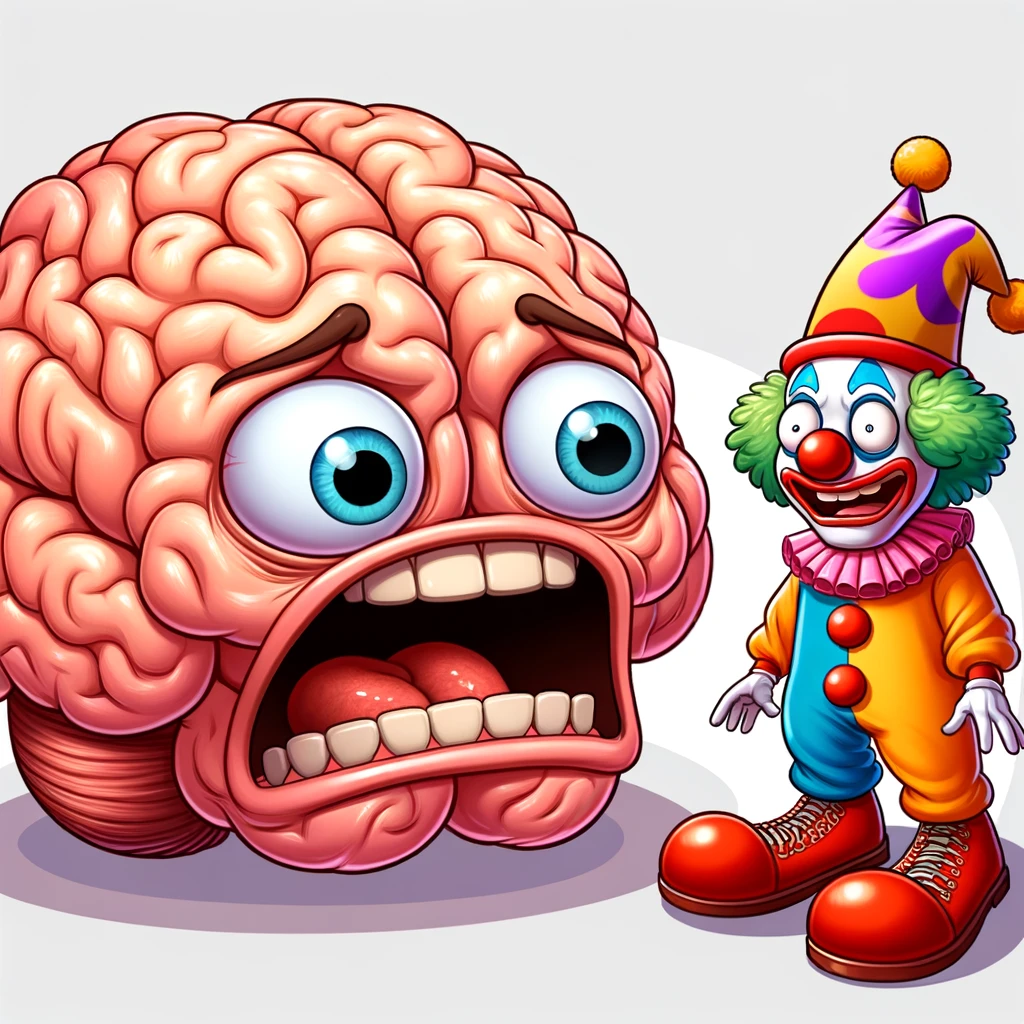
Step right up, step right up! Gather ’round, one and all, as we embark on a wild and wacky journey into the depths of your brain to uncover the shocking, the bizarre, and the downright hilarious truth about what happens when you encounter a clown! Yes, those red-nosed, oversized-shoed, and often terrifying creatures that have been haunting our dreams and entertaining our children for generations. Hold onto your whoopee cushions, folks, because we’re about to take a trip down the rabbit hole of clown-induced brain activity!
The Amygdala: Your Brain’s Clown Security System
First up, let’s talk about the amygdala, that almond-shaped bundle of joy (or terror) deep within your brain. When you spot a clown, your amygdala goes into full-on panic mode, trying to figure out if this colorful character is friend or foe.
- If the clown seems friendly enough, your amygdala gives the green light, and a flood of dopamine (the brain’s version of a party drug) is released, making you feel all warm and fuzzy inside.
- But if that clown looks like it crawled straight out of a Stephen King novel, your amygdala screams “RED ALERT!” and unleashes a tidal wave of cortisol and adrenaline, preparing you to fight, flee, or possibly wet yourself.
The Uncanny Valley: When Clowns Get Creepier Than a Telenovela Villain
Now, let’s talk about the elephant in the room (or should we say, the clown in the room?): the uncanny valley. This is when a clown looks almost human, but something is just… off. Maybe it’s the exaggerated features, the unnatural skin tone, or the fact that their smile is wider than the Grand Canyon. Whatever it is, it sends your brain into a tailspin.
Your poor facial recognition system, which is usually pretty good at identifying Aunt Mildred at family reunions, suddenly finds itself in a game of “Guess Who?” with the clown’s face. Is it human? Is it a demon from the seventh circle of hell? Who knows! All your brain can do is fire off warning signals like a malfunctioning smoke detector.
The Laughter Response: Why Clowns Crack Us Up (Even When They’re Not Trying)
But wait, there’s more! Despite the potential for sheer terror, clowns can also make us laugh until we snort like a pig at a comedy club. When a clown does something particularly hilarious (like getting stuck in a tiny car with 37 of their closest friends), your brain’s reward centers light up brighter than a Las Vegas casino.
The prefrontal cortex, which is usually busy with boring stuff like decision-making and impulse control, takes a break from being a responsible adult and joins in on the fun. It teams up with the limbic system (your brain’s party animal) to create that delightful feeling of uncontrollable laughter that makes your abs hurt and your face turn redder than the clown’s nose.
And here’s the kicker: laughter is contagious! Thanks to mirror neurons in your brain (which are like the copycats of the neural world), when you see someone else laughing at a clown, you can’t help but join in. It’s like a giant game of “Monkey See, Monkey Do,” except with more face paint and oversized shoes.
The Memory Machine: Clowns, the Unforgettable Faces
Now, let’s talk about memory. Whether you love clowns or find them more terrifying than a root canal without anesthesia, one thing is for sure: you’ll never forget them. That’s because the hippocampus, your brain’s very own scrapbook, is particularly good at holding onto novel and emotionally charged experiences.
And let’s face it, clowns are about as novel and emotionally charged as it gets. With their vivid colors, exaggerated features, and unpredictable antics, they create a sensory smorgasbord that your hippocampus simply can’t resist. It’s like trying to ignore a neon sign at a rave – good luck with that!
- This is why, years later, you might find yourself suddenly remembering that time a clown jumped out of a cake at your fifth birthday party, sending you into a screaming fit that rivaled a banshee with a megaphone.
- Or maybe you’ll fondly recall the circus clown who made you laugh so hard, you nearly inhaled your cotton candy.
Either way, those clown memories are there to stay, etched into your brain like a tattoo you got on a dare.
The Social Circus: Deciphering Clown Communication
Clowns are like the charades champions of the entertainment world, using exaggerated facial expressions, wacky body language, and physical comedy to get their point across. And when you witness their antics, your brain’s social cognition network goes into overdrive, trying to decipher the meaning behind every raised eyebrow, pratfall, and honk of the nose.
The temporal parietal junction (TPJ), which sounds like a fancy train station but is actually a key player in understanding others’ perspectives, works tirelessly to help you comprehend the clown’s intentions. Meanwhile, the fusiform face area (FFA) is like a facial recognition software on steroids, processing the clown’s unique features and expressions faster than you can say “pie in the face!”
Therapeutic Clowning: Laughter Really Is the Best Medicine
Believe it or not, clowns aren’t just for birthday parties and terrifying late-night movie binges. In recent years, the use of therapeutic clowns in healthcare settings has become more popular than avocado toast at a hipster café. Studies suggest that these red-nosed healers can reduce stress, alleviate pain, and boost the moods of patients, especially children.
When a therapeutic clown enters a hospital room, it’s like the patient’s brain gets a VIP invitation to a comedy show. The clown’s playful antics and gentle humor engage the prefrontal cortex, which is usually too busy worrying about medical bills and hospital food to have any fun. This mental distraction helps to modulate the activity of the pain matrix, which is like a group of evil brain minions that thrive on making you miserable.
Plus, the laughter and positive emotions triggered by the clown’s presence cause a flood of endorphins and oxytocin (the “cuddle hormone”) to be released, creating a sense of well-being and social connection. For a moment, the patient’s brain forgets all about the hospital’s scratchy gowns and questionable Jell-O, and instead basks in the warm glow of clown-induced happiness.
The Cultural Significance of Clowns: A Reflection of Our Collective Insanity
Clowns have been around for so long, they probably have their own AARP cards. From ancient civilizations like Egypt and Greece to modern-day circuses and children’s birthday parties, these colorful characters have been making us laugh, cry, and scream in terror for millennia.
When you encounter a clown, your brain doesn’t just process the immediate sensory input; it also taps into a vast network of cultural associations and memories. You might think of iconic clowns like Charlie Chaplin, who made silent films before talkies were cool, or Bozo the Clown, who haunted many a child’s nightmares with his eerie grin and flaming red hair.
- In a way, clowns are like a bizarre, shared inside joke that spans generations and cultures.
- They have the power to evoke a range of emotions and memories, from nostalgic joy to primal fear, all with a single honk of their oversized noses.
Conclusion
So there you have it, folks – a mind-bending journey into the chaotic world of what happens in your brain when you encounter a clown. From the amygdala’s panic response to the contagious laughter triggered by mirror neurons, every aspect of your clown experience is a testament to the awe-inspiring complexity of the human brain.
The next time you find yourself face-to-face with a clown, whether at a circus, a birthday party, or in your deepest, darkest nightmares, take a moment to appreciate the incredible neurological firestorm that’s happening behind the scenes. And remember, if all else fails, you can always try to outrun them… but good luck with that in those oversized shoes!
Recent Posts
So you clicked this link. That tells us everything. Somewhere in that nicotine-soaked brain, there's a tiny survivor waving a white flag, begging for mercy. Maybe it's time to listen to that...
Nobody handed you a rulebook when you walked in. There's no orientation video. No pamphlet titled "So You've Decided to Stop Being a Disaster: A Beginner's Guide." You just showed up, grabbed some...