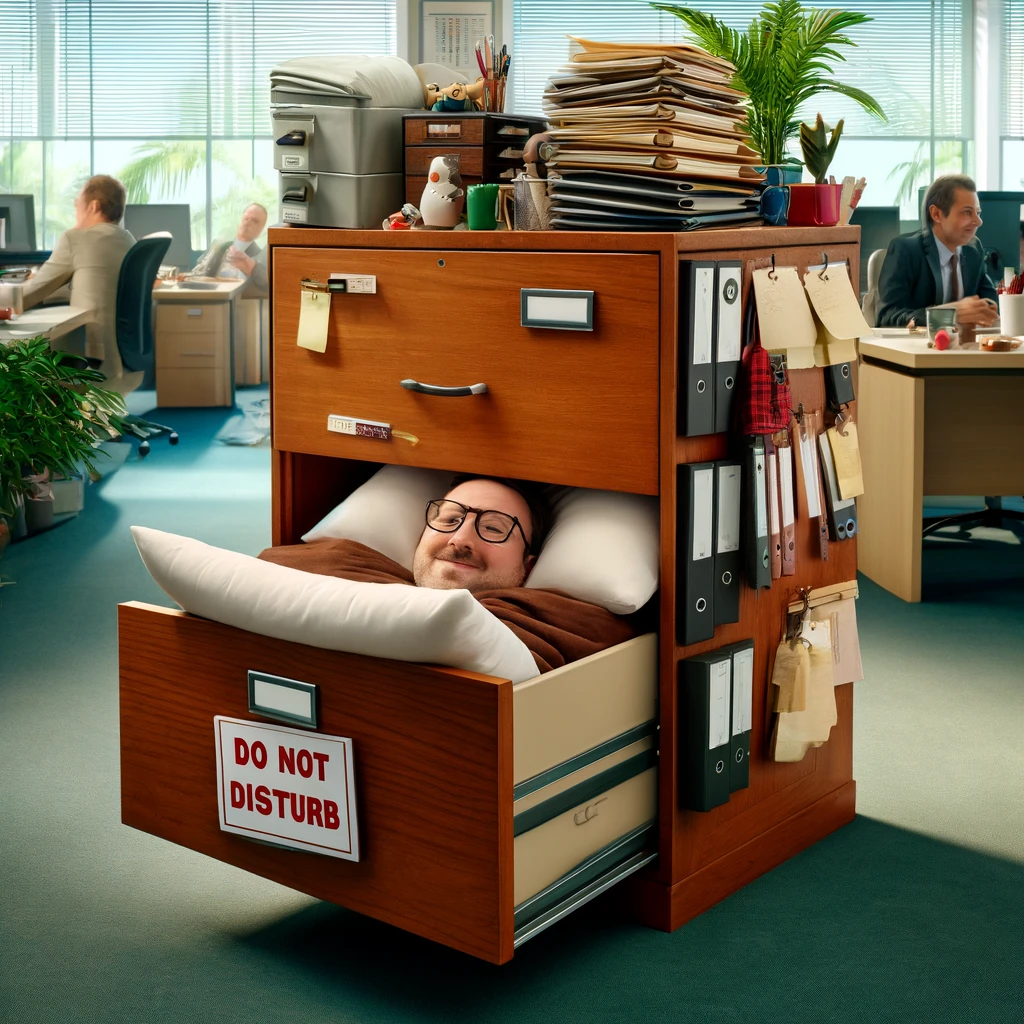
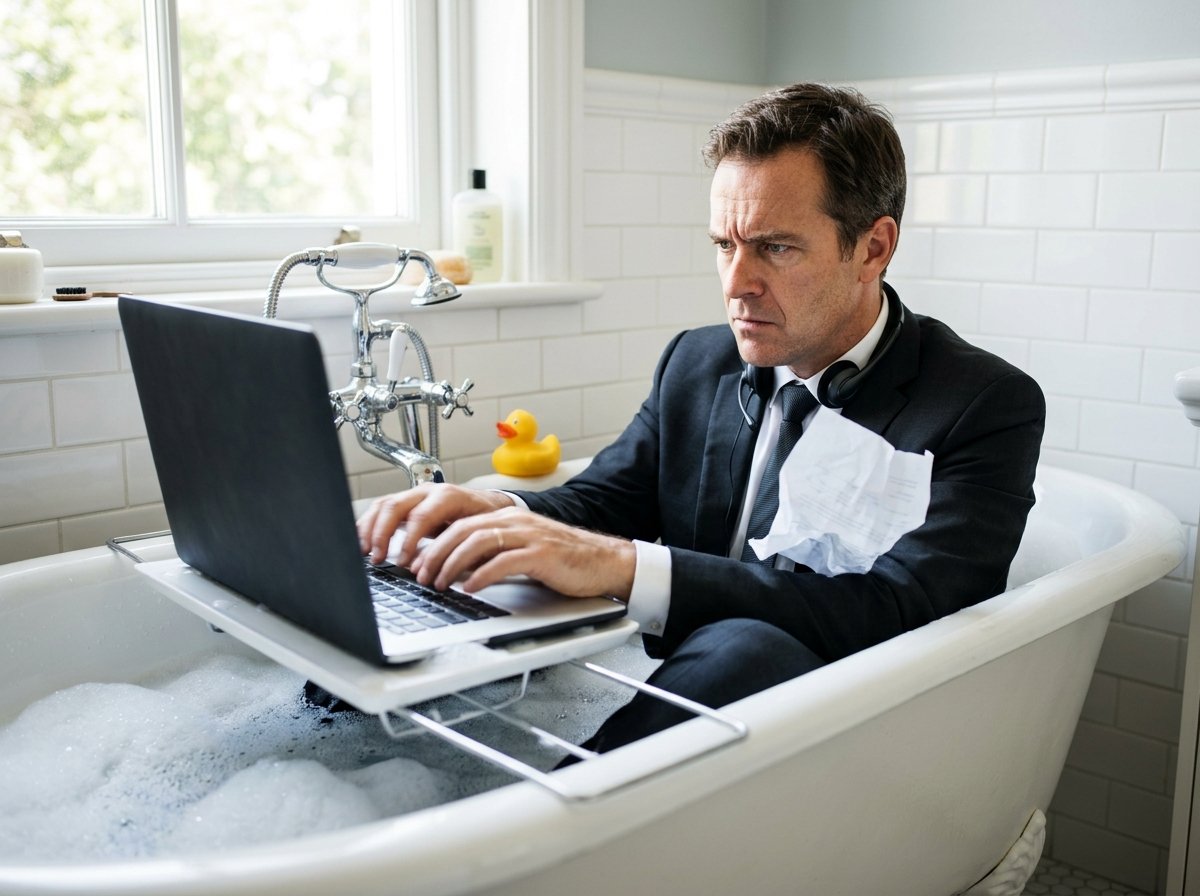
Office life is an elaborate dance of pretending to contribute while actually doing as little as possible. Forget the motivational quotes and productivity hacks; sometimes, you just want to collect that paycheck without breaking a sweat. If you’re ready to hone the skill of being busy while staying delightfully lazy, this is your manual. Your boss won’t know, your coworkers won’t care, and you’ll have plenty of time to stare blankly at the screen while fantasizing about escaping the clutches of responsibility.
Aggressive Mouse Clicking: The Symphony of Work
Mouse clicking is the drumbeat of productivity. Whether you’re looking at actual spreadsheets or just scrolling aimlessly through a 200-page PDF, the key is to keep your mouse active and noisy. No one ever questions the one who’s always clicking.
Alternate the rhythm. Throw in some double-clicks, then slow it down to a casual one-click, only to unleash a rapid-fire barrage like you’re fighting off cyber-demons. Do this with a furrowed brow and a clenched jaw, and you’ll instantly become a vision of focus.
Make it louder. Yes, use the angriest, clackiest mouse you can find. One of those obnoxious 1990s models with buttons that sound like the collapse of democracy. The sheer volume will communicate that you’re tackling some corporate-level crisis.
Throw in some keyboard typing. Type gibberish furiously, but never let anyone catch what’s on the screen. If someone looks over, switch tabs to an Excel sheet filled with random numbers, because numbers are the universal sign of “leave me alone, I’m busy.”
Make use of the mouse wheel, too. Scroll up and down like you’re desperately searching for a cure for your boredom-induced apathy. Occasionally stop to stare intensely, as if the font size holds all the secrets of the universe.
Engage in the ultimate power move: shake your head slightly while clicking. It’s an underused tactic that says, “I’m finding solutions, but they’re just so elusive.”
Random Desk Clean-Ups as “Stress Relief”
This technique is all about moving stuff around in a way that looks necessary but is entirely pointless. Start with the classic “rearrange everything on your desk” routine. Papers that were in one pile should now be in three smaller piles.
Make sure to stand up for this activity. Standing implies urgency. Throw in a few dramatic sighs, because nothing says ‘stressed employee’ like organizing documents with a heavy heart.
Stack some documents, then unstack them. It doesn’t matter if you just created the piles—it’s about looking busy.
Shift office supplies around. The stapler, which was once on the left, now belongs to the right. Then move it back. Your desk should look like a battleground of pointless repositioning.
Dust off random items while muttering to yourself. It gives the impression that you’re overwhelmed but still determined to “tidy up” despite it all.
Drop a pen on purpose, then pick it up slowly while glancing around. People will assume you’re caught up in an intense train of thought.
Introduce an entirely useless whiteboard. Draw flowcharts that mean nothing to anyone. Erase them immediately and start over.
Occasionally reach for a paperclip like it’s the key to your success.
If anyone asks, say you’re “just clearing your head to refocus.” It sounds respectable, yet vague enough to pass.
The desk should never look too neat. Messy enough to suggest hard work, but not chaotic enough to seem incompetent.
Every now and then, slam a drawer shut. It adds to the drama and lets everyone know you’re dealing with heavy stuff, metaphorically speaking.
Open Way Too Many Tabs and Look Frustrated
Too many tabs can either represent utter chaos or a dedicated worker juggling projects. The difference? Your poker face. Stay deadpan as you bounce between 50+ browser tabs like a squirrel on Red Bull.
Load up every tab imaginable. Get tabs for news articles, tabs for industry reports, tabs for cat videos, and tabs for that one listicle about the “Top 10 Ways to Look Busy at Work.” Don’t be afraid to even have a tab open for the local weather. The more tabs, the more convincing your performance.
Make your face a blend of confusion, disgust, and panic. Add a dramatic sigh here and there. Toss in a frustrated mutter like, “Ugh, these damn servers,” or “Why is everything loading so slowly today?” Now you’re a legend.
Highlight text randomly in Word docs or Google Docs. Use bold, italics, and underline as though you’re formatting the Declaration of Independence. Color-coding is your friend—make sections look like a rainbow massacre happened on your screen.
Talk to yourself softly. Whisper things like, “This deadline is insane,” or “There’s no way I can finish this in time.” You’ll not only look busy, but you’ll also sound like the office hero who’s taking one for the team.
For added drama, occasionally smack the spacebar like it owes you money. It’s a foolproof way to sound productive.
Always make sure one of those tabs is a work email. That way, if anyone catches you mid-scroll, you can casually say, “Just catching up on emails.” It’s so boring that no one will question it.
Once in a while, close all your tabs in a fit of pretend rage. Exclaim, “That’s it, I’m starting from scratch!” People will admire your ‘dedication’ and passion for the task.
The Strategic Coffee Break Marathon
Coffee breaks are a staple of any good workplace charade. Make it last. It’s not just about getting a cup of coffee; it’s about turning it into a journey of workplace wanderlust.
Stretch that walk to the coffee machine. Move slowly, as if your every step is burdened by the weight of critical corporate decisions. People will think you’re contemplating a merger when you’re really just debating between regular and decaf.
On the way back, stop to chat with a coworker. Make it look like an intense business discussion. “So, about the report…” is a good opener that implies depth, but never actually leads anywhere.
Get creative with your coffee-making process. Pour it too slowly. Stir it like you’re mixing the elixir of eternal life. Take one sip, then decide it’s not quite right, and start over.
Occasionally, spill a little coffee on purpose. This will necessitate another round trip to the break room for napkins, buying you a few extra minutes of looking productive.
Never return directly to your desk. Make a detour around the office as if you’re monitoring the morale of your coworkers. Nod thoughtfully at random intervals.
Sip your coffee dramatically at your desk. Lean back in your chair like you’re solving world hunger, even if you’re just scrolling through Twitter.
If someone comments on your third coffee cup, say, “The workload today is insane.” It’s a great line that invites sympathy without requiring further explanation.
Consider taking your laptop to the break room. Make it seem like you’re too busy to even finish your coffee.
If questioned about all the coffee trips, laugh and say, “It’s the only thing keeping me going.” It’s ambiguous, relatable, and 100% distraction-proof.
When you finish the coffee, sit back and stare into the distance for a minute. It makes it look like you’re strategizing, when you’re really just trying not to fall asleep.
Throw in an extra trip or two around 4 p.m. People are too tired to question your motives at that hour.
Have a Document Open and Keep Switching Between Pages
An open document is the Swiss Army knife of fake productivity. Have a 60-page Word doc or PDF on your screen at all times and scroll randomly. Bonus points if it’s something nobody else understands.
Flip back and forth between pages with the urgency of someone on the run. Make it look like you’re trying to connect the dots in a conspiracy.
Once in a while, highlight a random block of text, then erase it like you’re making groundbreaking edits. If someone asks what you’re working on, say, “Just revising the proposal.” Vague, official, and perfect.
Try not to laugh while you’re making up graphs. You don’t need data—just slap together a bar chart and insert it into the document. Make sure the axes are labeled with buzzwords like “Productivity vs. Time Allocation” or “Synergy Metrics Over Fiscal Quarters.”
Tap the keyboard while staring intensely at a paragraph. Type random words, then quickly delete them. This makes it look like you’re really grappling with a complex thought.
Get creative with comments and notes. Leave confusing notes for yourself in the document, like, “Circle back on this,” “Explore implications,” or “Consider alternative methodologies.” They’re meaningless, but they’ll make you look like you’re dealing with deep corporate stuff.
Add some ridiculous footnotes. No one reads those anyway.
If someone interrupts, look up with exhausted eyes and say, “Yeah, just deep into this report.” No one will dare ask questions—they’ll just nod sympathetically and walk away.
Make your document resemble a school group project: overly long, confusing, and with zero useful content. The more complex it appears, the more impressed your colleagues will be by your ‘effort.’
The Bathroom Trip Gambit: The Long Walk of “Reflection”
Bathroom trips are the ultimate loophole in any workday. They’re socially acceptable, don’t raise suspicion, and give you a legitimate reason to disappear.
Make each trip as slow as possible. Shuffle your steps like you’re wading through a swamp of corporate sorrow.
Once in the bathroom, use it as a time to decompress from your exhausting day of doing nothing. Sit on the toilet with your phone, scrolling aimlessly through memes.
Exit with a look of mild exasperation, as if the weight of existential dread came crashing down while washing your hands.
Take the long way back to your desk. If anyone catches you loitering, say you were just reflecting on a strategy issue.
Mastering the Art of the Strategic “Uh-huh” in Meetings
Meetings are golden opportunities to look busy without actually doing anything. Make your presence felt with the perfect “uh-huh.”
During meetings, nod rhythmically. Aim for a mix between a bobblehead and a wise monk.
Pretend to take notes, but really just doodle meaningless patterns. Make the occasional concerned “Hmm…” sound to appear deeply engaged.
If called upon unexpectedly, repeat the last thing someone said but slightly rephrased. It will sound insightful without actually adding anything new.
Never look directly at the person talking. Stare off into space like you’re visualizing groundbreaking ideas.
Email Drafting: The Slowest Form of Communication Known to Man
Email drafting is where pretending to be busy becomes an Olympic sport. Open your email app and type slower than you’ve ever typed before.
Draft emails that take hours. Make them as unnecessarily detailed as possible.
Spend 10 minutes on a single sentence, then delete it and start over.