How to Train Your Dog Using Positive Reinforcement
Attention all you dog lovers, puppy parents, and canine compadres! Are you tired of your furry friend treating your home like their own personal toilet? Do you find yourself constantly apologizing to guests for your dog’s enthusiastic “greeting” techniques that involve jumping, licking, and the occasional crotch-sniffing? Well, fear not, my fellow dog devotees, because we’re about to embark on a wild and hilarious journey into the world of positive reinforcement training!
The Power of Positivity: Why Positive Reinforcement Works
Before we dive into the nitty-gritty of training your four-legged friend, let’s take a moment to understand why positive reinforcement is the way to go. Unlike punishment-based methods that can leave your dog feeling confused, anxious, or plotting their revenge, positive reinforcement focuses on rewarding good behavior and ignoring the bad.
Think about it: if you got a delicious slice of cake every time you did something right, wouldn’t you be more likely to keep doing it? The same goes for your dog! By rewarding them with treats, praise, and belly rubs when they do something you like, you’re essentially telling them, “Hey, keep doing that thing! It’s making me really happy, and you’re scoring some serious goodies!”
The Treat Treaty: Choosing the Right Rewards
Now that we’ve established the power of positivity, it’s time to talk about the most important aspect of positive reinforcement training: treats! And no, we’re not talking about those stale, cardboard-like biscuits that taste like sadness and regret. We’re talking about the good stuff, the cream of the crop, the doggy equivalent of a Michelin-starred meal.
When selecting treats for training, keep these tips in mind:
- Choose treats that are small, soft, and smelly (think: tiny pieces of hotdog, cheese, or liver)
- Opt for treats that are easy to consume quickly, so your dog doesn’t get distracted during training
- Make sure the treats are healthy and don’t make up more than 10% of your dog’s daily calorie intake (because nobody wants a chunky puppy)
- Vary the treats to keep things interesting and prevent boredom (just like you wouldn’t want to eat the same meal every day for the rest of your life)
The Training Tango: Mastering Basic Commands
Alright, it’s time to put those treats to good use and start training your dog like a pro! Here are some basic commands to get you started:
Sit Pretty
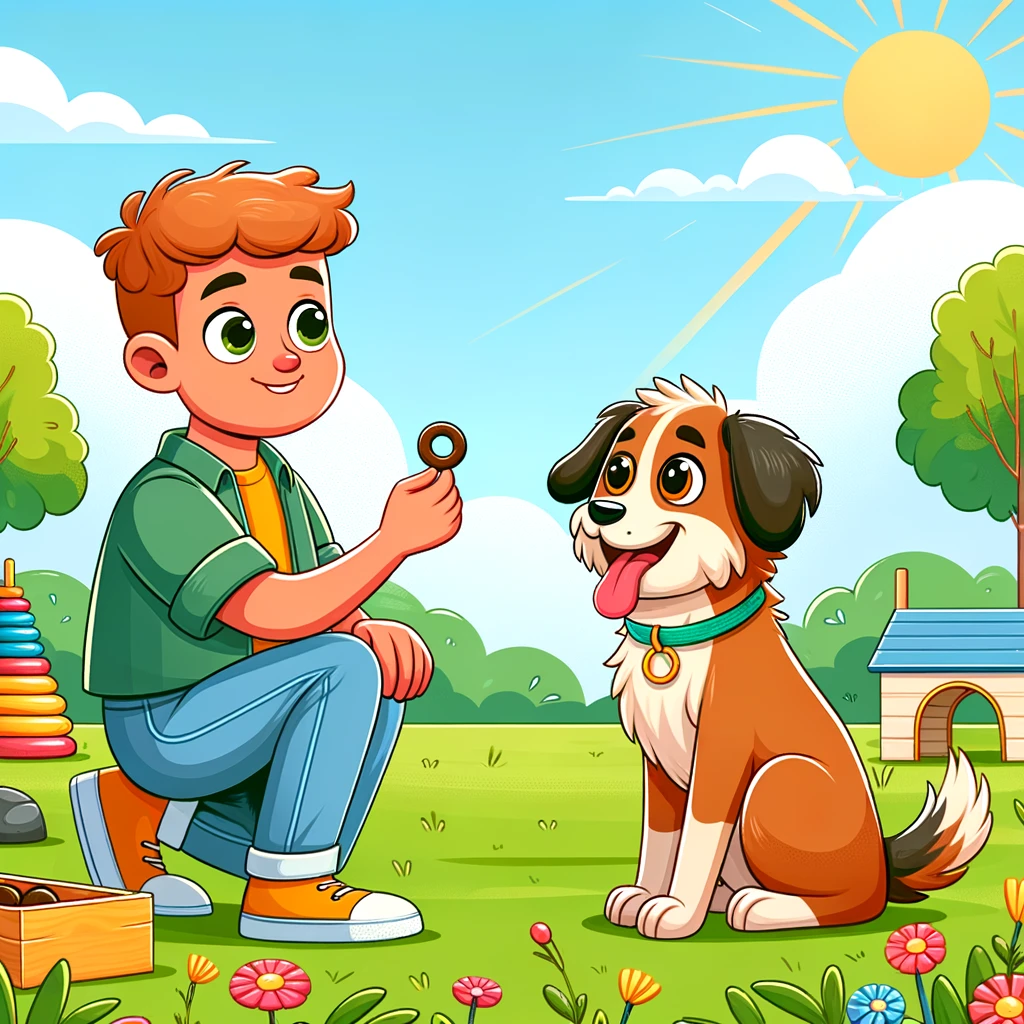
Teaching your dog to sit is like teaching them the doggy version of “please.” It’s polite, it’s practical, and it’s the foundation for many other commands. Here’s how to do it:
- Hold a treat close to your dog’s nose, and slowly move it up and back over their head.
- As your dog’s head tilts back to follow the treat, their butt should naturally hit the ground. The moment their butt touches the floor, say “sit” and give them the treat.
- Repeat this process until your dog is sitting on command faster than you can say “good boy!” (or girl, we don’t discriminate).
Down and Dirty
Teaching your dog to lie down is like giving them a one-way ticket to relaxation town. It’s also a great way to keep them calm and controlled in exciting situations (like when the mailman comes, and they want to show off their impressive bark-and-lunge routine). Here’s how to teach the “down” command:
- Start with your dog in a sit position, then hold a treat close to their nose.
- Slowly lower the treat to the ground, keeping it close to your dog’s body. As your dog follows the treat, their elbows should naturally touch the ground.
- The moment your dog is lying down, say “down” and give them the treat. Praise them like they just won the doggy lottery.
- Repeat until your dog is dropping to the ground faster than a sack of potatoes.
Stay, Stay, Stay (Cue the Rihanna Music)
Teaching your dog to stay put is like giving them a superpower. It’s useful in so many situations, from keeping them safe during a walk to preventing them from stealing your sandwich off the counter. Here’s how to teach the “stay” command:
- Start with your dog in a sit or down position, then hold your hand out in front of you like a stop sign and say “stay.”
- Take a step back, and if your dog stays put, give them a treat and praise them like they just discovered the cure for the common cold.
- Gradually increase the distance and duration of the stay, rewarding your dog each time they successfully hold their position.
- If your dog breaks the stay, simply say “oops” and start again. No need to get frustrated or break out the doggy dunce cap.
The Recall Rumba: Getting Your Dog to Come When Called
Picture this: you’re at the dog park, and your furry friend is having the time of their life chasing squirrels, sniffing butts, and generally being a lovable goofball. But when it’s time to go home, they suddenly develop selective hearing and act like they’ve never heard the word “come” in their life. Sound familiar? Fear not, because we’ve got the secret to a reliable recall!
- Start by choosing a special recall word that you’ll only use when you want your dog to come to you. Something short, snappy, and easy to remember, like “here,” “come,” or “yo dawg!”
- Whenever you use your recall word, make sure you have the most amazing, irresistible treats on hand. We’re talking about the doggy equivalent of a five-star gourmet meal.
- Start practicing your recall in a low-distraction environment, like your living room or backyard. Call your dog using your special word, and when they come to you, give them a jackpot of treats and praise.
- Gradually increase the distance and distractions, practicing your recall in different environments and situations. The more you practice, the more reliable your dog’s recall will become.
- Never, ever punish your dog for coming to you, even if it takes them a while. Coming to you should always be a positive experience, filled with treats, praise, and maybe even a little dance party.
The Patience Polka: Dealing with Setbacks and Frustration
Listen, we know that training your dog can be frustrating at times. There will be moments when your dog seems more interested in chasing their own tail than learning a new command, or when they decide that the middle of your freshly cleaned carpet is the perfect spot to relieve themselves. But here’s the thing: getting angry, frustrated, or giving up on training altogether will only make things worse.
When you feel like tearing your hair out (or your dog’s fur, but please don’t), remember these tips:
- Take a deep breath, count to ten, and maybe even do a little yoga pose (downward dog, anyone?)
- Remind yourself that your dog is not intentionally trying to make your life difficult. They’re just being a dog, with all the quirks and curiosities that come with it.
- If you’re getting frustrated, take a break. Go for a walk, play a game of fetch, or just give your dog some good old-fashioned belly rubs. Training should be fun for both of you, not a chore.
- Remember that progress takes time. Your dog isn’t going to learn everything overnight, and that’s okay. Celebrate the small victories, like when they sit on command for the first time or when they finally stop chewing on your favorite shoes.
The Lifelong Learner Limbo: Continuing Education for You and Your Dog
Just like you never stop learning (unless you’re a know-it-all, in which case, congratulations on your omniscience!), your dog’s education should be a lifelong pursuit. Once you’ve mastered the basics, there’s a whole world of tricks, sports, and activities to explore with your furry friend.
Here are just a few ideas to keep your dog’s brain (and body) active and engaged:
- Teach them silly tricks, like playing dead, spinning in a circle, or giving you a high-five. Not only will it impress your friends, but it’ll also give you and your dog something to do on rainy days.
- Enroll in a dog sport, like agility, flyball, or nose work. Not only will it give your dog a chance to burn off some energy and showcase their skills, but it’ll also give you a chance to meet other dog lovers and maybe even earn some shiny ribbons.
- Take your dog on new and exciting adventures, like hiking, swimming, or even a road trip. Exposing them to new sights, sounds, and smells will keep their mind sharp and their tail wagging.
- Continue your education by attending workshops, reading books, or even taking online courses on dog training and behavior. The more you learn, the better equipped you’ll be to handle any challenges that come your way.
The Grand Finale: A Lifetime of Love, Laughter, and Licks
And there you have it, folks! A crash course in positive reinforcement training, complete with bad puns, silly analogies, and more dog-related humor than you can shake a stick at. But in all seriousness, training your dog using positive reinforcement is one of the best things you can do for your furry friend. Not only will it strengthen your bond, but it’ll also give you a well-behaved, happy, and confident companion for life.
So, here’s to a lifetime of love, laughter, and licks (the good kind, not the face-licking kind, unless you’re into that). May your treats be plentiful, your patience be endless, and your dog be the goodest boy (or girl) in all the land.
Happy training, my fellow dog lovers!